
On Saturday we went to the Fiesta de Porca Celta with our neighbours. Porca Celta is a local rare breed of pig. The Celtic Pig was prevalent in Galicia before the Franco era and almost died out, but is now being bred commercially again by a group of enthusiasts. The oak forests around Sarria are perfect for an animal whose primary natural food source is acorns.
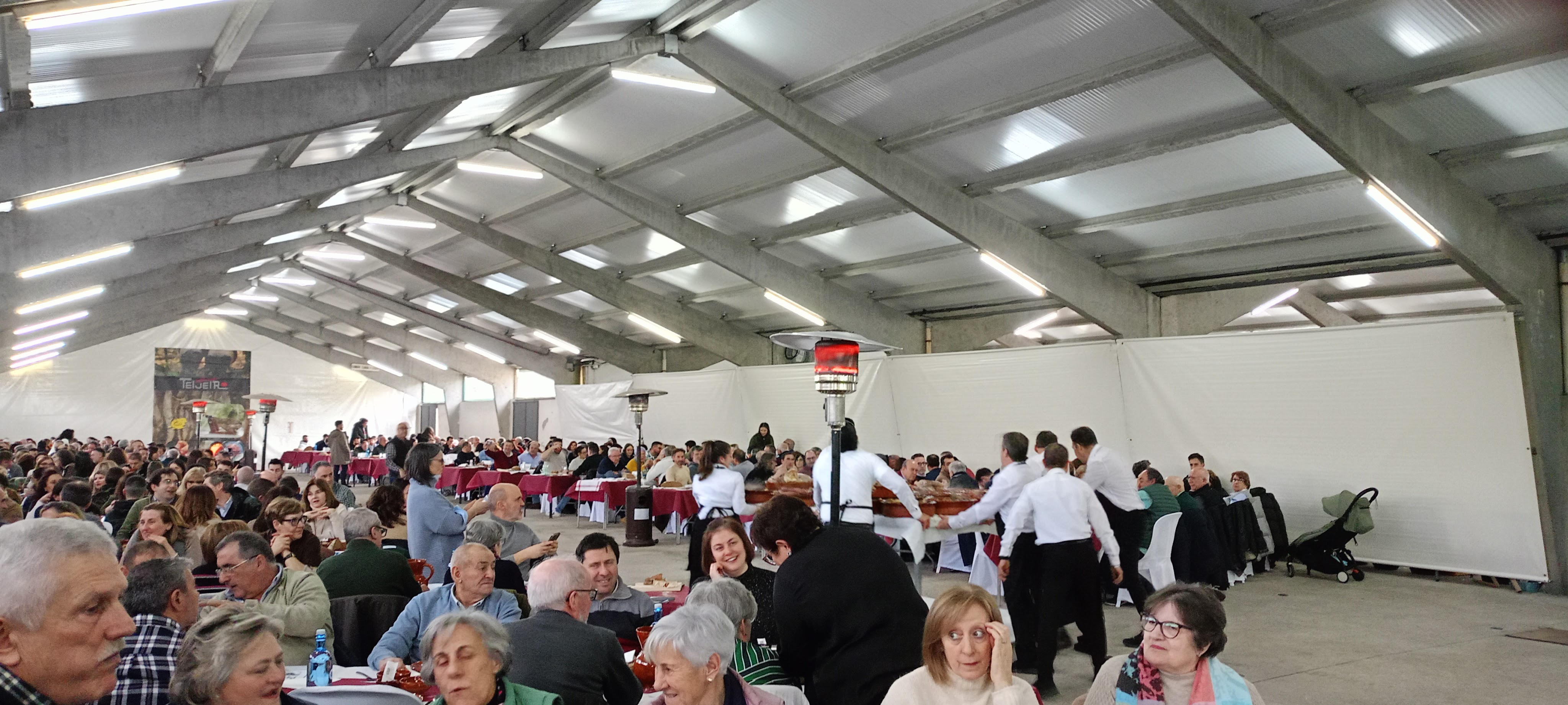
Since my neighbour is a butcher, this is quite an important event for him, especially as his shop specialises in high-quality free – range rare breed pork. It took place in the local cattle market. No cows today; this was all about pigs.
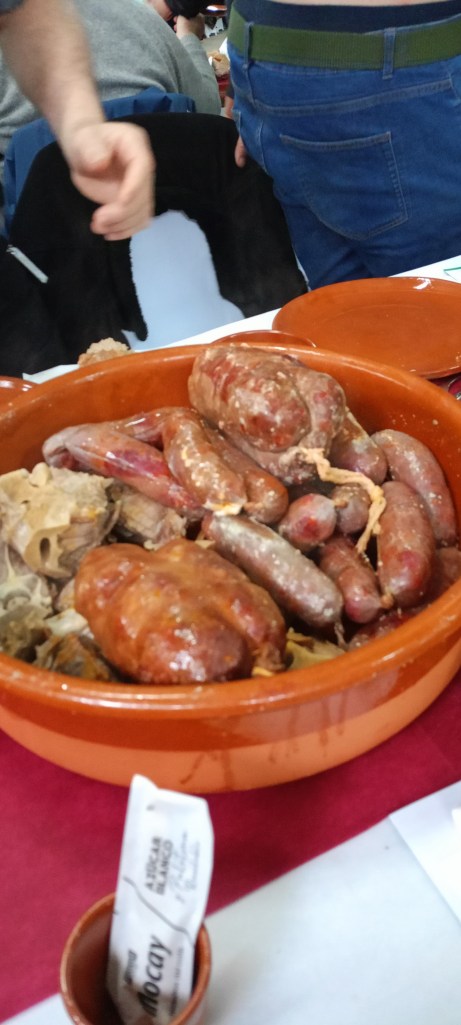
The festival comprised a reception with the chance to talk to and sample goods from local artisans, followed by a Cocido Gallego (pig’s head stew) with local cheeses, served with cake and membrillo for dessert. And, of course, coffee, and orujo.
We arrived early, and people had already packed the hall. It was much too crowded for me, so I found a space by the inflatable pig and watched.
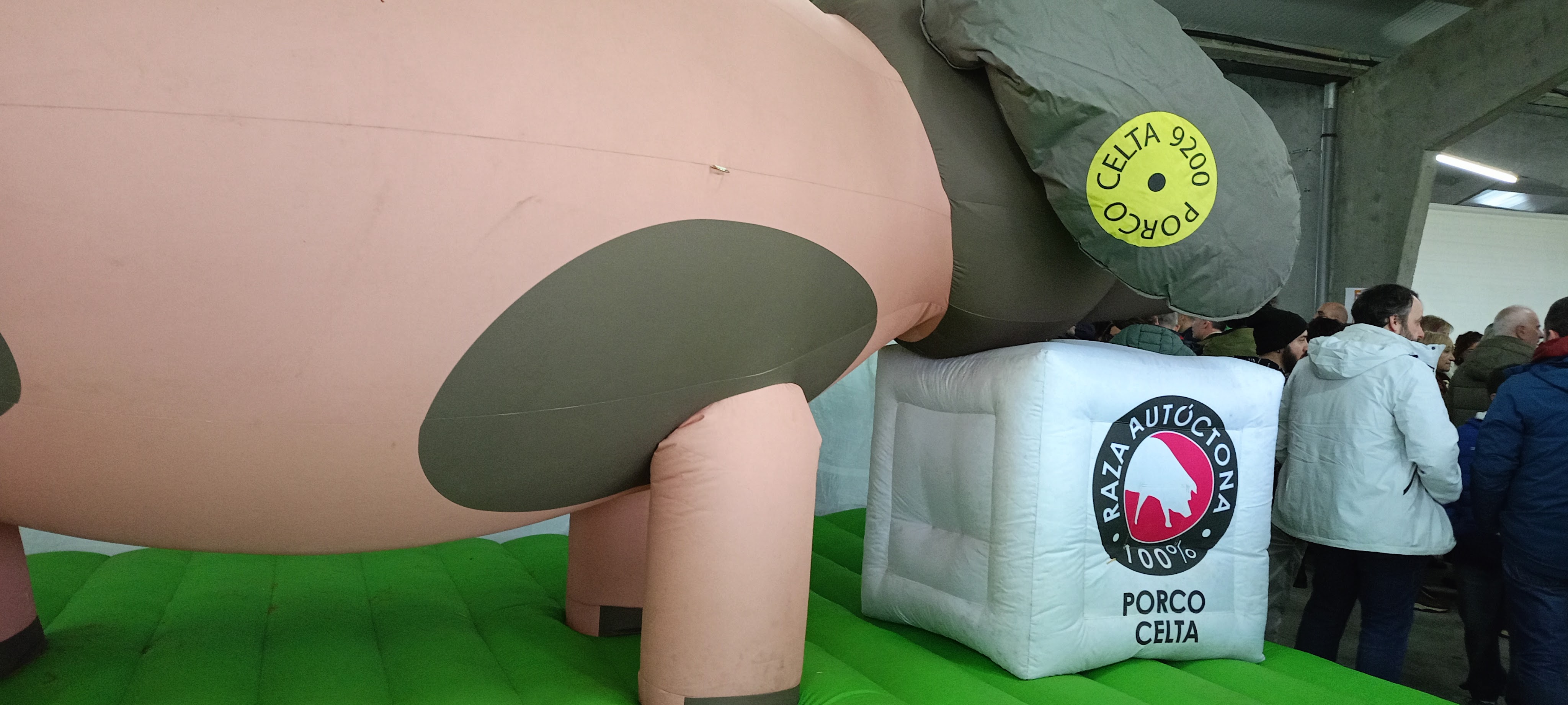
I was a little nervous; we were part of a table of thirteen and the only people I knew were our neighbours. I don’t speak Gallego, which is the local language, so I wondered if I would feel isolated when the time came to take our places.
I enjoyed watching the crowd, though. Spain is a social nation, and creating business contacts and making friends follows the same pattern. People stopped to chat: the woman who serves me in the chemist, a couple of Steve’s old students, one of the waiters from the cafe where I sometimes have coffee, and so on.
Soon it was time to move through to the dining area, it was impressive, sixty two tables of thirteen and a top table for council members and dignitaries.
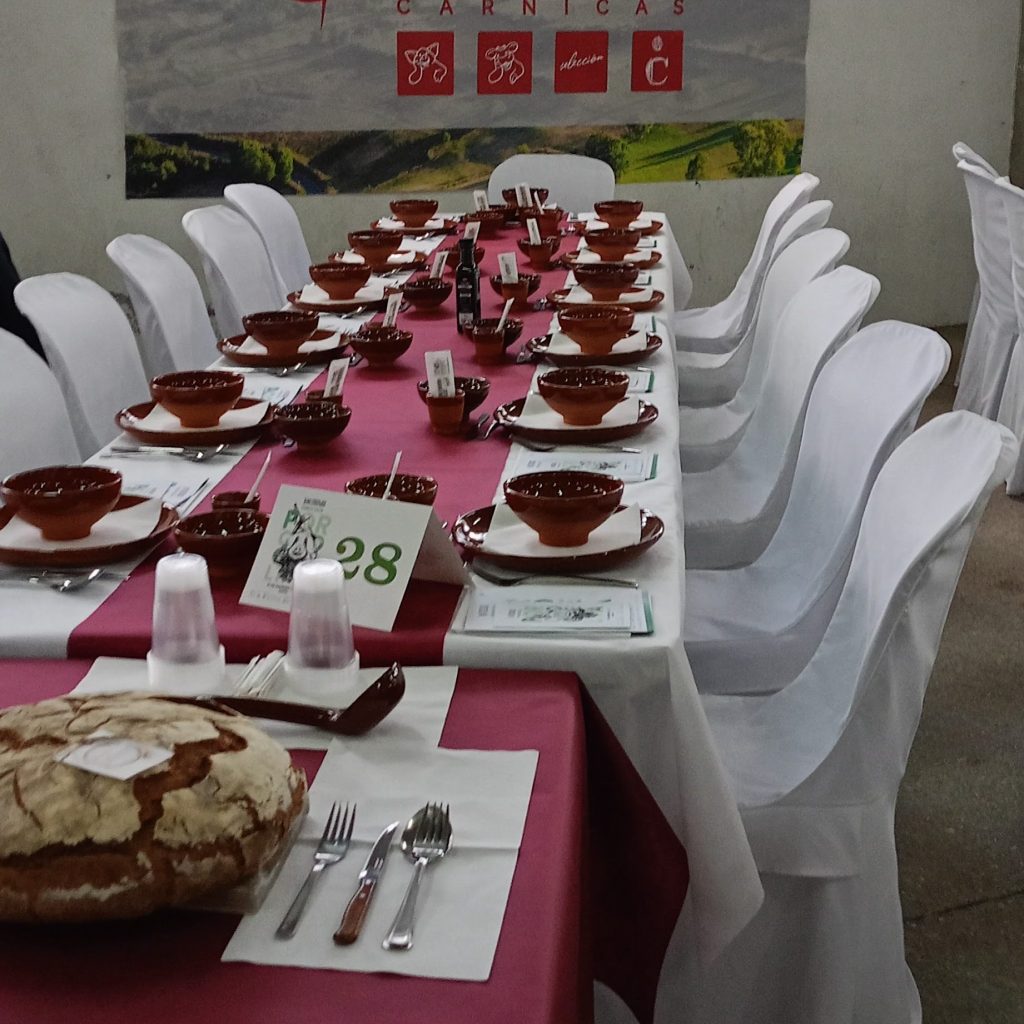
The format from then on was like a Burns Night supper, if you have ever been to one of those. Two bagpipe players and two drummers piped in the food. The servers brought out the broth first, and then big platters of meat and potatoes followed. The wine was in jugs, and they were bottomless. There was more food than anyone could eat.
My fear of feeling isolated was groundless. The lady next to me also didn’t speak Gallego. She spoke English because she had attended university in New York and obviously Spanish. Her husband spoke Spanish and Gallego, so we communicated in Spanish and English. One thing I love about Spain is that there is very little social hierarchy, so at our table there was a doctor, a dentist, two shop assistants, a factory worker , a police officer, a hotelier plus others. No one competed for status, and no one discussed their work unless someone directly asked them. I only knew because my neighbour pointed people out before we sat down and gave me their family history while she was doing it.
Cocido is one of those traditional dishes that you need to have been brought up with to really relish. But here are the photos Would you enjoy this?
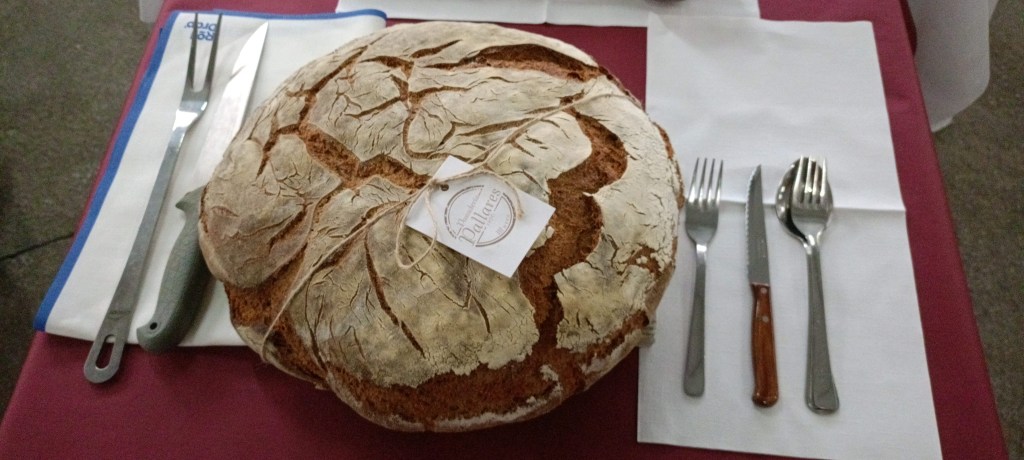
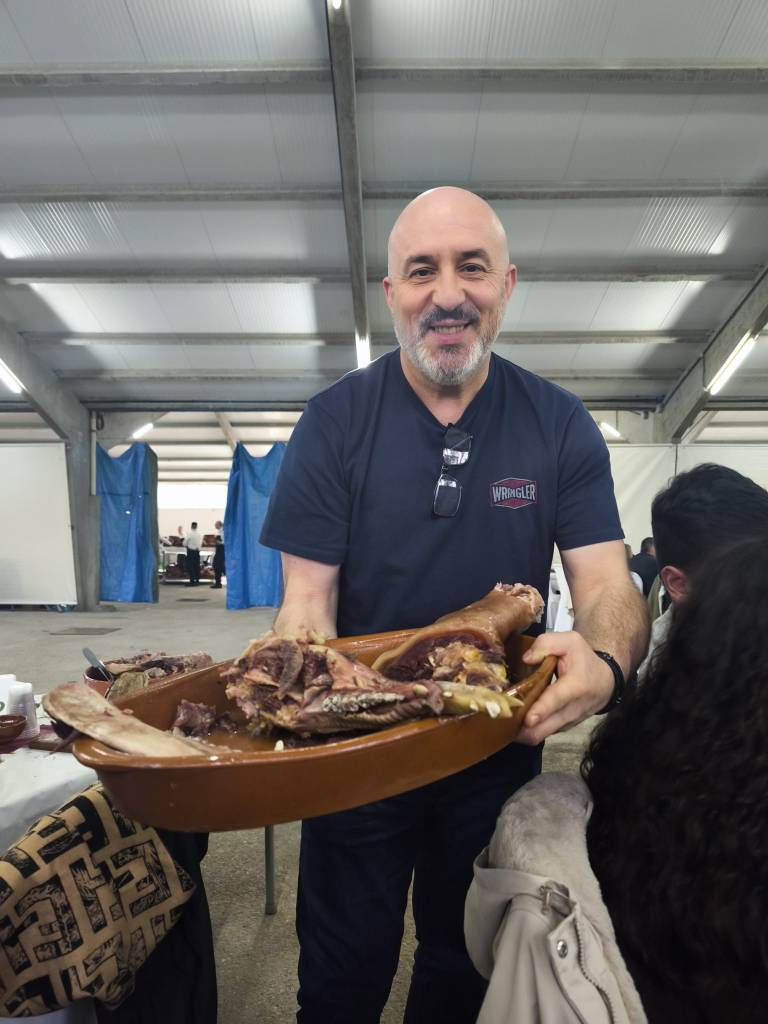
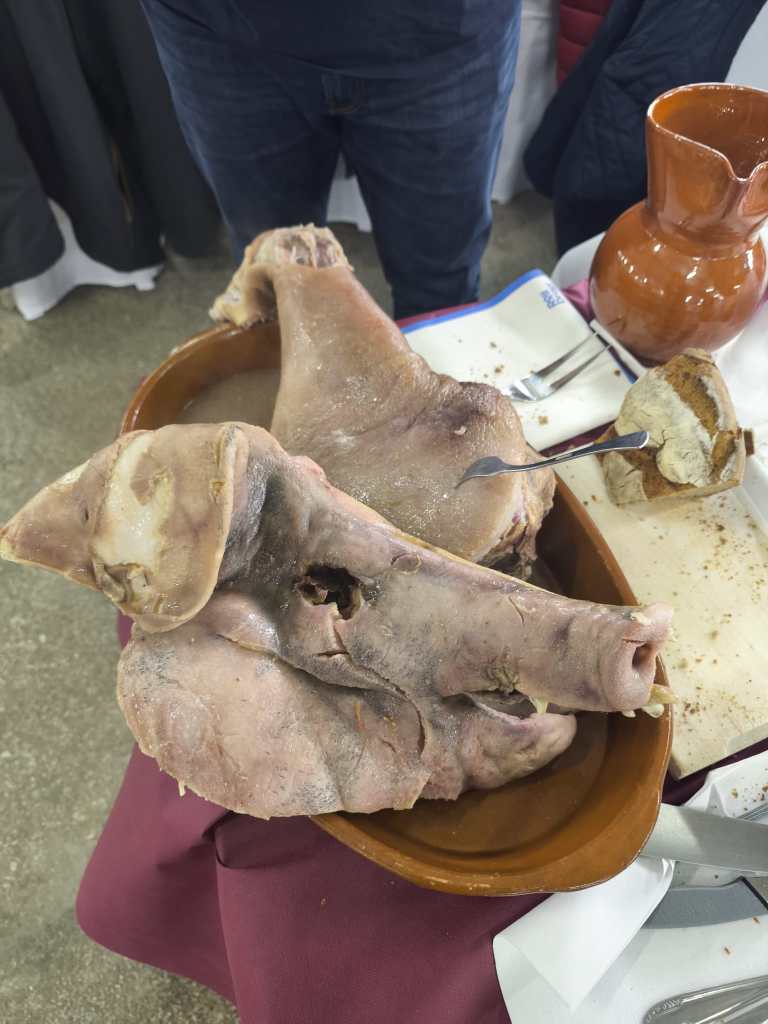
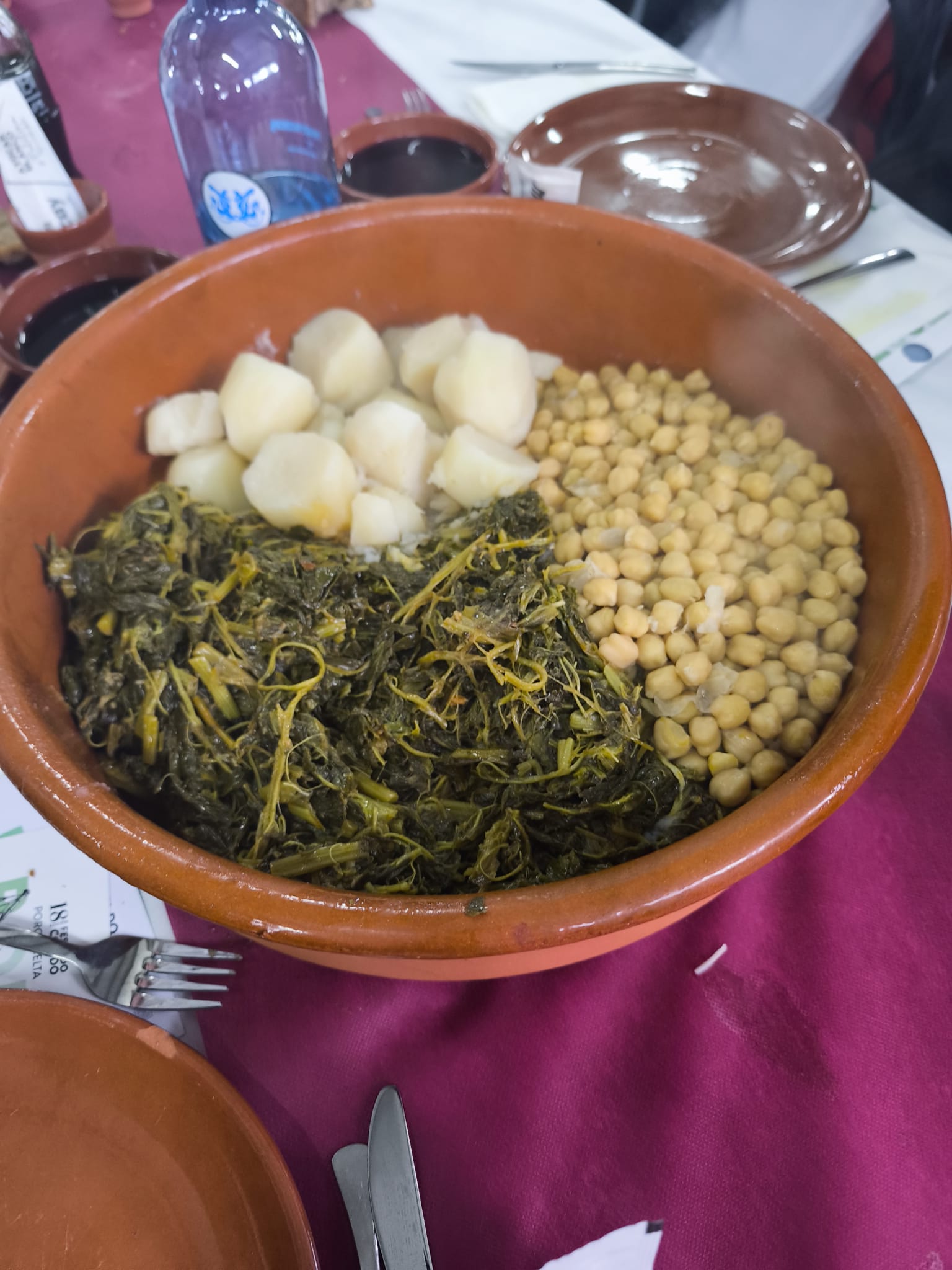
A Quemada rounded off the event. (Bowls of orujo mixed with sugar and spices and set alight.) I loved everything, except possibly the main course, and we will gloss over that. The whole spectacle ,the company, and the feeling of being part of a local tradition make me feel as though I am integrated into the community. I met people who will stop and chat if I see them again, and that is important in a country where social life happens out on the streets, rather than in people’s homes.
As an immigrant in a country, you never truly fit in, you have no shared culture, you don’t always ‘get’ the jokes or the sense of humour, and you don’t have a group of friends you have known since school days. But I love the learning process, and bit by bit becoming part of tomorrow’s culture, because even while the world is getting more dangerous, it’s getting smaller. Learning how other people live and sharing yourself with them will, I hope, make it safer.
 Abigail Thorne