Typically, new writers ask themselves several questions. Questions that never go away entirely. When I started, other writers, either in person or online, gave me their answers to these questions. After I had been writing for a few years, I realised that there are no fixed rules. Success (in my own terms rather than financially) would only come, if I found my own way and my own routines. After a few more years, I understood many of the emotional ups and downs can trip you up and how easy it is to burn out if you are not careful. I found myself asking the same questions again, and to my surprise, my answers were different. Now I review my writing routines and habits every few months to keep me out of a destructive rut. Let me unpack each question, so we can compare our answers.
Question 1. Do I need to write every day?
There are good reasons for creating a daily writing habit. Books take a long time to write, and most of the time it’s about sitting down at your desk and ploughing on. If you only write when you are in the mood, your book will never get finished. You need to train your creative reflex so that inspiration comes when you sit down to write, not the other way around. The more often you write, the more your writing will improve. It doesn’t matter how many writing techniques you have learned; repetition is the greatest teacher of good writing. Writing every day reduces the pressure to perform. When writing becomes a habit, like washing up, it doesn’t matter if you have a bad day. Sometimes you need to delete a whole load of words because they don’t work, and if you write every day, there is always tomorrow to write new and better words. You stay connected to your work in progress so that you don’t waste time rereading the last few chapters to orient yourself every time you sit down. Honestly, writing a book takes a fair amount of stamina even if you love the process so you need to build in self-discipline. No one can help you with that.
Let’s be realistic now; life gets in the way of that. Medical issues, the needs of your family, running a household, and unexpected events all mean that you miss days or weeks. At the moment, for example, my old dog Rowan, who is fifteen, is very poorly. I am writing still, but my heart isn’t in it. I don’t believe in treating dogs like children, but even so, I don’t want him to die alone, so I’m spending as much time checking on him as I do sitting at my desk. I am waiting for an eye operation with a long recovery time that will not allow for a daily writing habit. I could go on. You will have your own restrictions, and this isn’t an all or nothing occupation. Remember that you need to be kind to yourself don’t let rules get in the way of living your best life.
So do I write every day? No, but I do have a Plan B. If I know I’m not going to write the next day, I make a few notes to help me get straight into the story the next time I’m at my desk. I don’t rely on feelings; if I can write, I do, even if I’m not feeling it. I set long-term word targets instead of daily ones, so that it doesn’t matter if I write loads on one day and not very much the next. We are all different, and in my experience, it takes a long time to work out a pattern that works for you and your circumstances. The most important thing is to enjoy what you are doing; don’t let it become a burden or a chore. Your emotions and your attitude to writing will find its way into your story, that’s what makes your writing unique. In the age of AI the one thing that makes us stand out is the joy that seeps into your work. What do you do? Do you write every day?
Next time we’ll talk about question 2 : How to pick up your project again after a disruption.
Just a quick extra post to ask you to pray for the People of SW Spain and Portugal thousands of people have lost their homes already. Thousands more have been evacuated and don’t know what will happen. The weather forecast predicts more rain and more storms in the coming weeks.
On Saturday we went to the Fiesta de Porca Celta with our neighbours. Porca Celta is a local rare breed of pig. The Celtic Pig was prevalent in Galicia before the Franco era and almost died out, but is now being bred commercially again by a group of enthusiasts. The oak forests around Sarria are perfect for an animal whose primary natural food source is acorns.
Since my neighbour is a butcher, this is quite an important event for him, especially as his shop specialises in high-quality free – range rare breed pork. It took place in the local cattle market. No cows today; this was all about pigs.
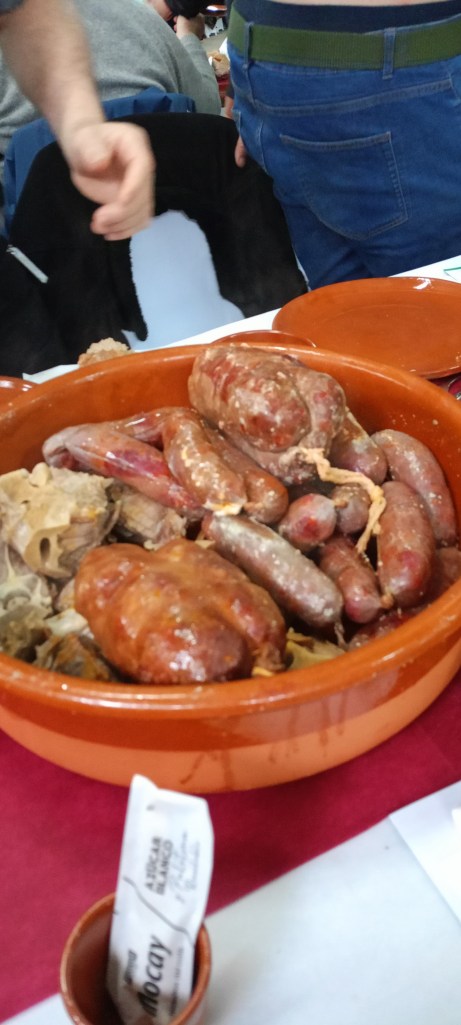
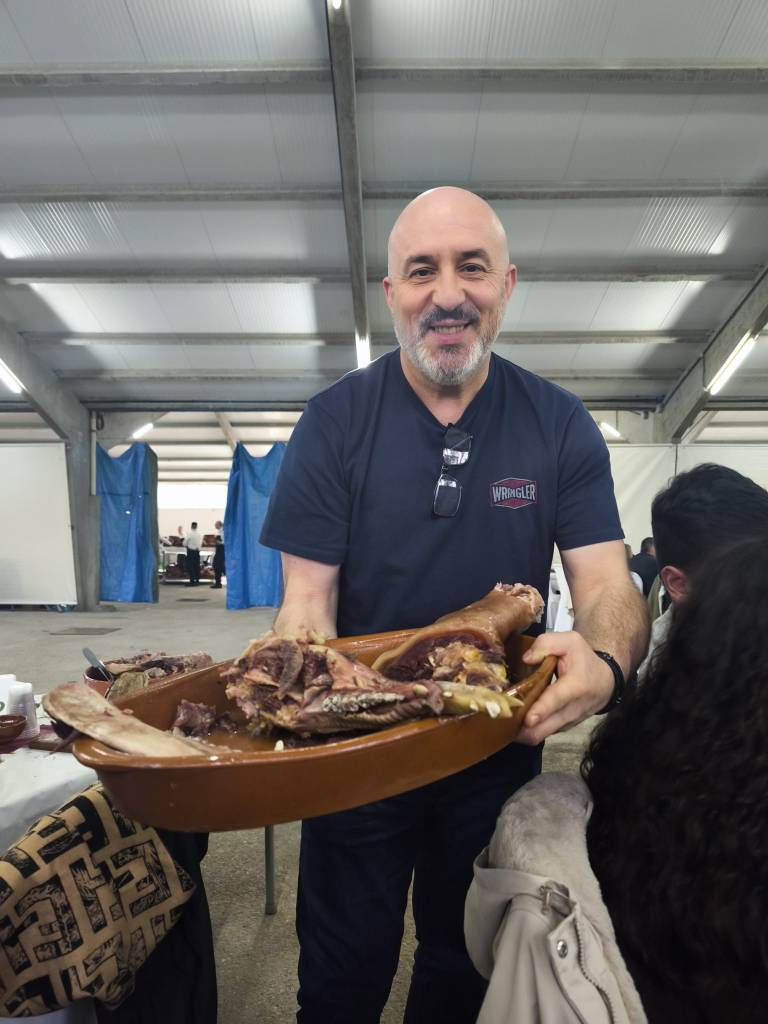
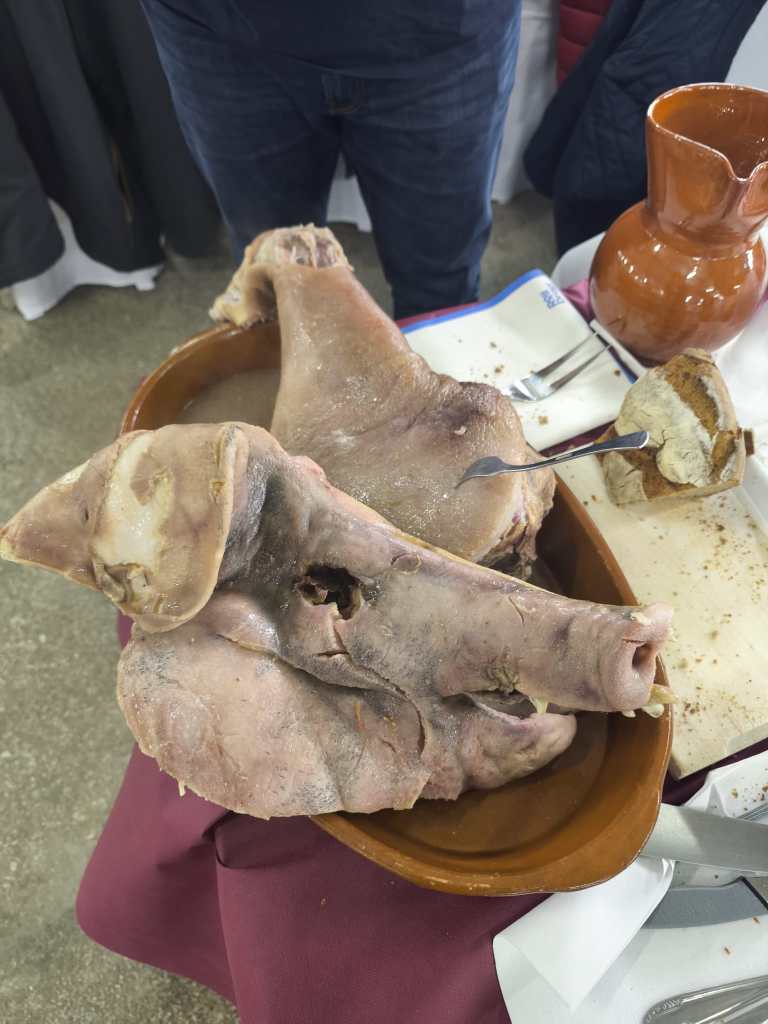
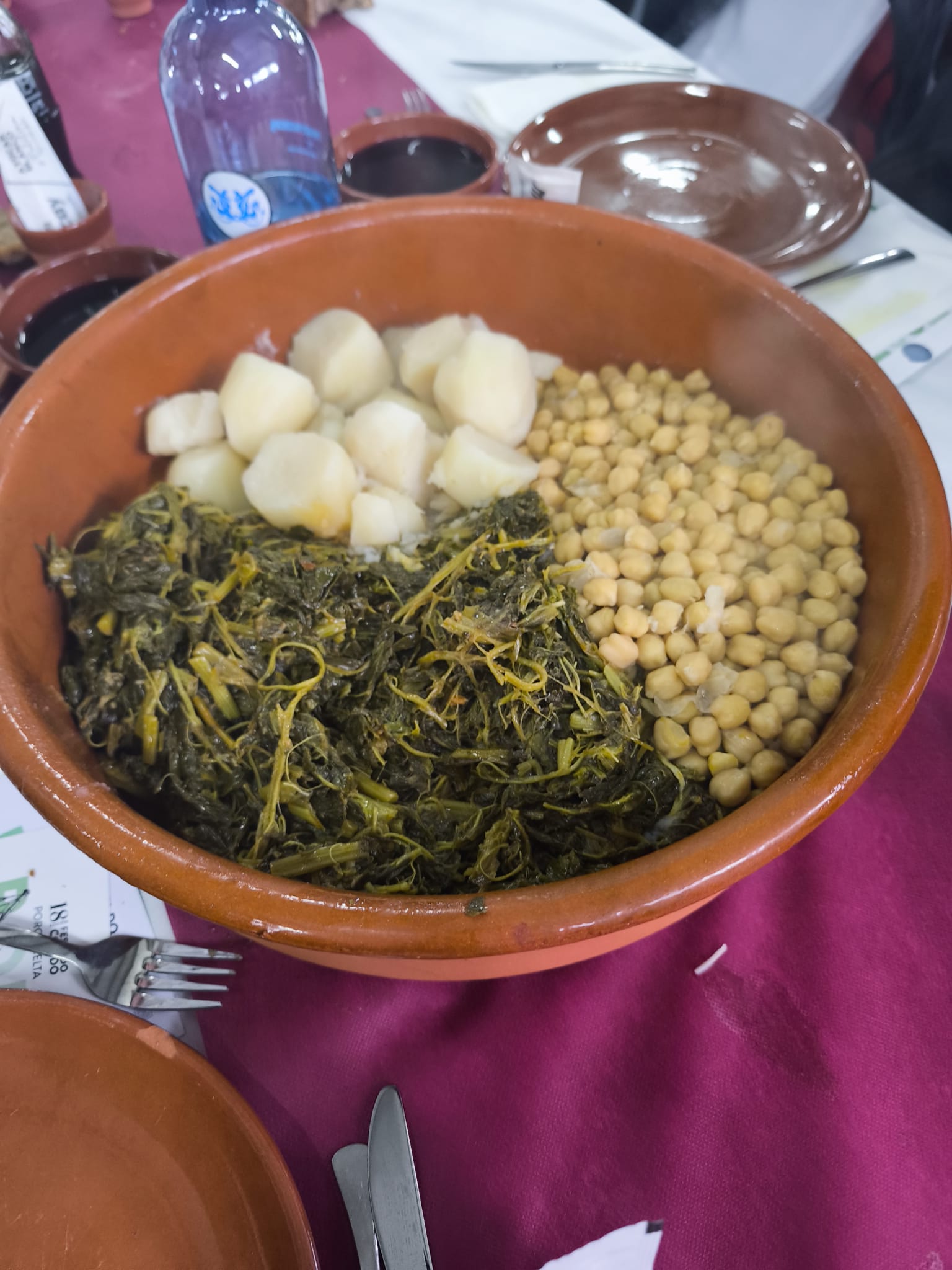
The festival comprised a reception with the chance to talk to and sample goods from local artisans, followed by a Cocido Gallego (pig’s head stew) with local cheeses, served with cake and membrillo for dessert. And, of course, coffee, and orujo.
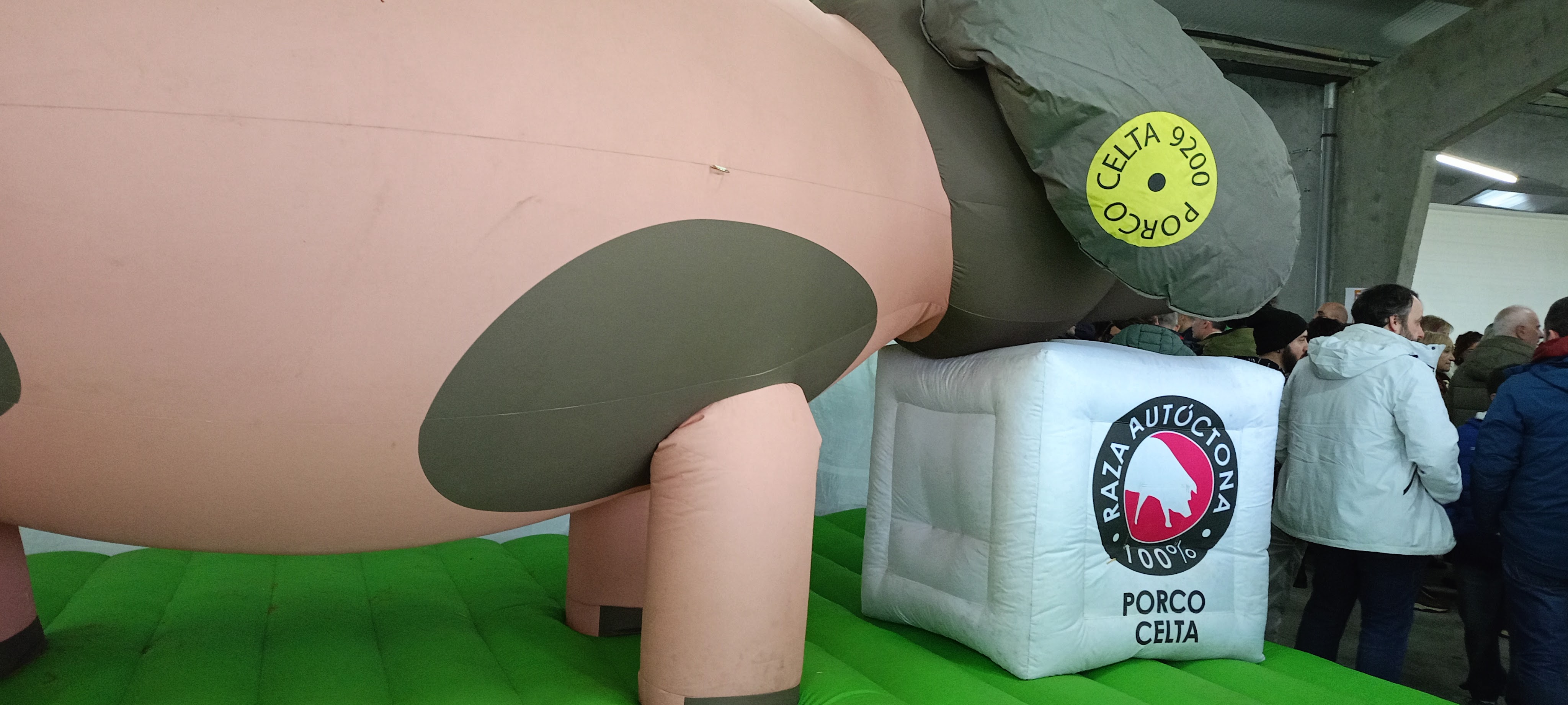
We arrived early, and people had already packed the hall. It was much too crowded for me, so I found a space by the inflatable pig and watched.
I was a little nervous; we were part of a table of thirteen and the only people I knew were our neighbours. I don’t speak Gallego, which is the local language, so I wondered if I would feel isolated when the time came to take our places.
I enjoyed watching the crowd, though. Spain is a social nation, and creating business contacts and making friends follows the same pattern. People stopped to chat: the woman who serves me in the chemist, a couple of Steve’s old students, one of the waiters from the cafe where I sometimes have coffee, and so on.
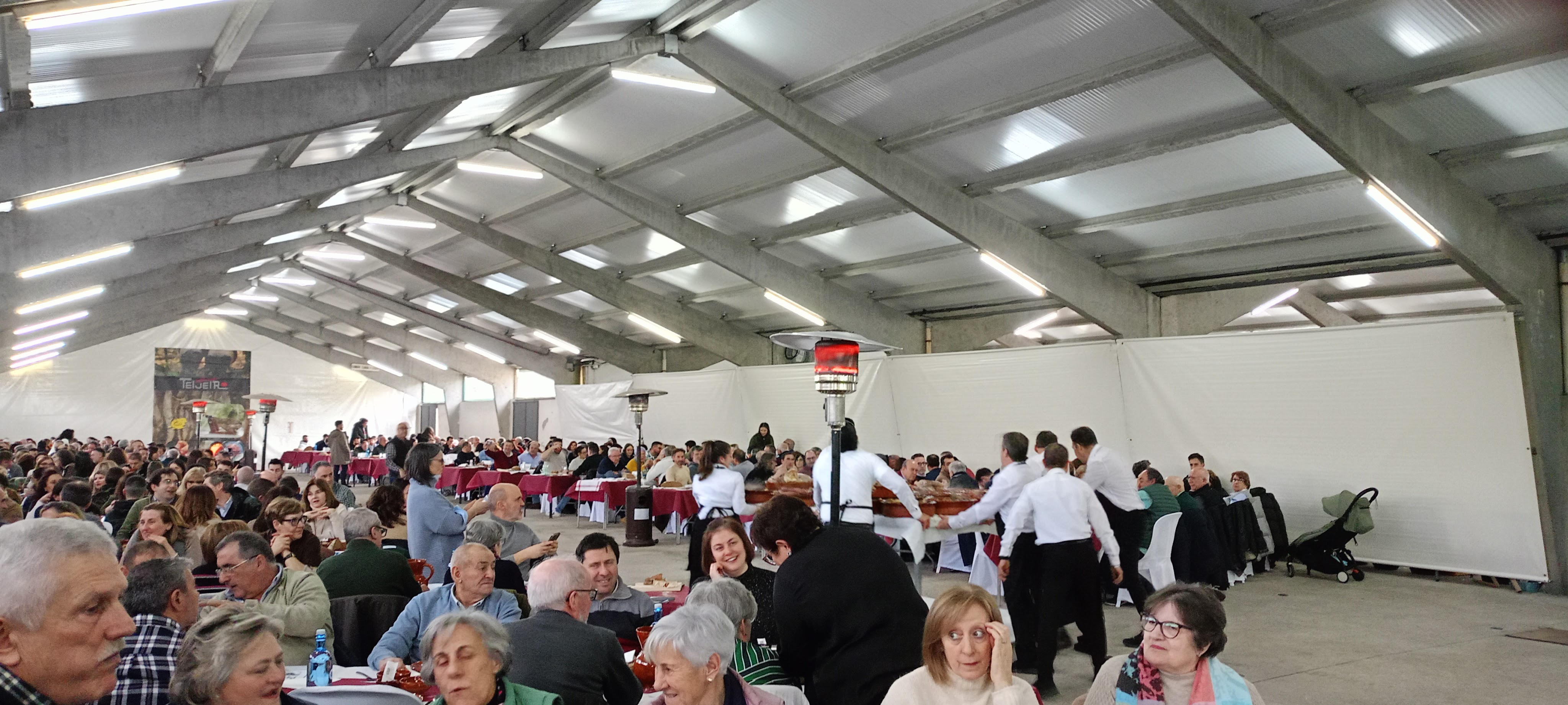
Soon it was time to move through to the dining area, it was impressive, sixty two tables of thirteen and a top table for council members and dignitaries.
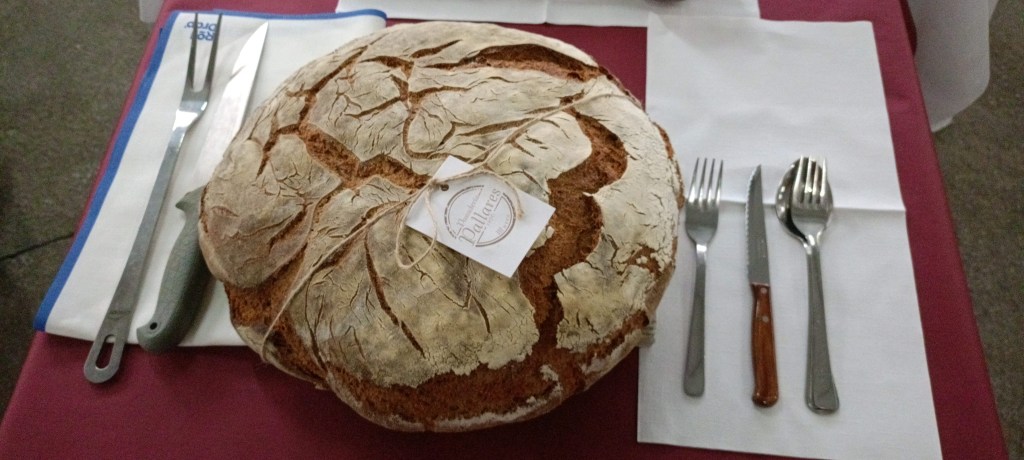
The format from then on was like a Burns Night supper, if you have ever been to one of those. Two bagpipe players and two drummers piped in the food. The servers brought out the broth first, and then big platters of meat and potatoes followed. The wine was in jugs, and they were bottomless. There was more food than anyone could eat.
My fear of feeling isolated was groundless. The lady next to me also didn’t speak Gallego. She spoke English because she had attended university in New York and obviously Spanish. Her husband spoke Spanish and Gallego, so we communicated in Spanish and English. One thing I love about Spain is that there is very little social hierarchy, so at our table there was a doctor, a dentist, two shop assistants, a factory worker , a police officer, a hotelier plus others. No one competed for status, and no one discussed their work unless someone directly asked them. I only knew because my neighbour pointed people out before we sat down and gave me their family history while she was doing it.
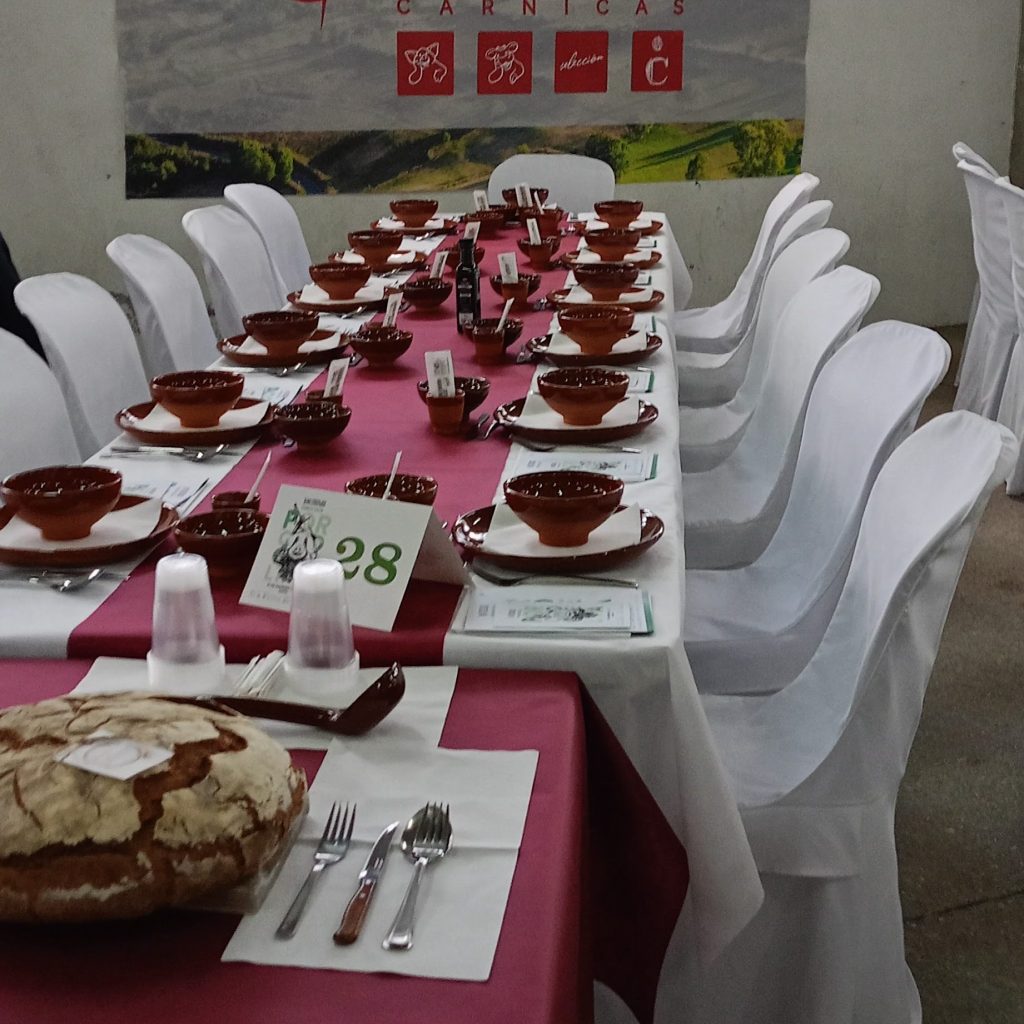
Cocido is one of those traditional dishes that you need to have been brought up with to really relish. But here are the photos Would you enjoy this?
A Quemada rounded off the event. (Bowls of orujo mixed with sugar and spices and set alight.) I loved everything, except possibly the main course, and we will gloss over that. The whole spectacle ,the company, and the feeling of being part of a local tradition make me feel as though I am integrated into the community. I met people who will stop and chat if I see them again, and that is important in a country where social life happens out on the streets, rather than in people’s homes.
As an immigrant in a country, you never truly fit in, you have no shared culture, you don’t always ‘get’ the jokes or the sense of humour, and you don’t have a group of friends you have known since school days. But I love the learning process, and bit by bit becoming part of tomorrow’s culture, because even while the world is getting more dangerous, it’s getting smaller. Learning how other people live and sharing yourself with them will, I hope, make it safer.
The best-laid plans. Today I was going to start a series of blogs called Writer’s Diary. My intention was to tell you about the way I build a story. Not an instructional blog, but an insight into the way I work. I planned to start by talking about subplots because that’s what I have been struggling with recently. That subject is on hold.
So now my writer’s diary is starting with technology. The reason is simple: in the last week technology has failed me badly. In the modern world, writers and the printing industry are reliant on pretty advanced technology. It’s a romantic notion that we write in pencil on notepads, never make a spelling mistake, and have a perfect knowledge of both basic grammar and the latest changes in writing conventions. I read comments on social media all the time from people who claim never to use technological aids. I don’t believe them. The process is too slow. If they write in pencil, who types up their work for the publisher or the self-publishing body? If they do it themselves, then writing becomes a two-stage process, even before the editing starts.
If they don’t think they need to edit their work, it usually means that they pay over the odds when someone else does it for them. If they use a publisher, several people edit at different stages of the process. If they self-publish, the chances are that someone edits and someone else proofreads to pick up the mistakes they claim never to make. It took me a long time to realise that you need either technology or a team of people helping you. The other issue is time: the more efficient you are at using the available technology, the faster you can produce a new work. The creative part never changes; everything that surrounds it takes time. That brings me to my point.
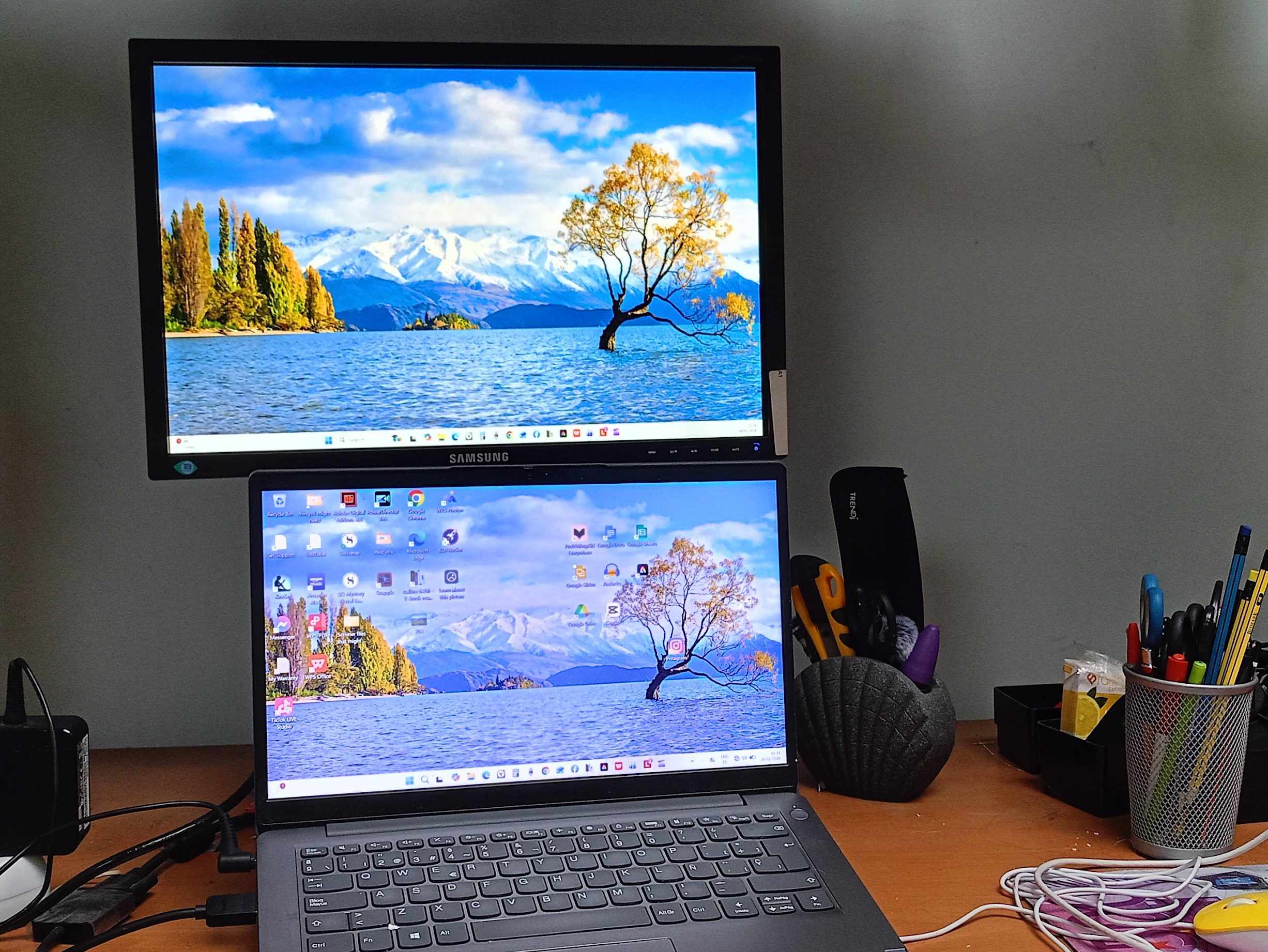
The battery has failed on my computer. On the day I noticed the problem, I spent my writing time making backups of everything, both in the cloud and on a separate drive. Last time I had a computer failure, I lost three-quarters of a new novel, so since then I have been borderline obsessive about backing my work up. The second day we had a storm and our internet went down. I spent that day visiting the computer repair shop to order a new battery and the internet provider to report the problem. Next week I’ll lose my computer for three days while they fit the new battery. I can use it, but only for short bursts before it gets too hot. My writing time follows a pattern. It’s a way to protect the creative part of the day. I set out my desk in a certain way; I have a computer setup that I feel comfortable with. I do things in a certain order. I have a list of jobs and an order to do them being creative is, tiring and I want to preserve that process. When my order is interrupted, I find it a struggle to get any creative work done. This week I have been hitting brick walls, like a sportsman who has lost his lucky socks. When I examine it, it seems superstitious, so it’s time for a rethink. Steve thinks I should stick to using paper and a pencil because they are portable and reliable. I say ‘blow that for a game of soldiers’, but seriously, I do need to be more flexible in my approach. So why do I need the internet to write? Most of my research is done on line. Most of it before I start writing. It’s quicker that way, and I write crime fiction, not history. I don’t need primary sources. Once I start the first draft I need to look things up, check a detail, consult a map, email someone to ask for information, I use the web everyday. I use a spell and grammar checker, for which I need to be online. To make it clear, I use one because it speeds up the process; I do still edit myself, but my first draft is cleaner and better if I use a spell and grammar checker. Editing, like storytelling, takes time to learn, and writers take a lifetime to learn both properly. Technology helps and speeds up that process for me. These days writing aids are the key to quality work because the infrastructure for writers has changed and also depends on technology. So do I have workarounds when I lose part of my system?. No, I hadn’t before this week. Most of this bog was produced using mobile data from my phone and a hotspot. It works well enough, and I pay for mobile data that I don’t use, so it makes sense, but it’s the first time I have used in that way. While my computer is being repaired, I will spend time reviewing my systems. I am thinking of a portable keyboard, so I can use my phone or, better still, a tablet as backup, and so that I can write anywhere. Many people write entire novels using their mobile’s keypad, but my thumbs don’t work that well. I’ve tried it; it doesn’t work for me. I guess I wasn’t born into the mobile generation. I have one and use it, but its like speaking in a different language; you never quite get the nuance, right? What do you do? I would be interested to know.
I admit to being frustrated, and my work in progress is suffering. I have completely lost the thread of the story, and resolving the subplot is the least of my problems. When I am set up again, I will need the first couple of days to read what I have written so far and get back into the groove. I need longer that to regain my momentum and finish the draft. That’s why I need to build in flexibility in the future so I can move from one setup to another without a pause. I need to be challenged from time to time to put me on the road to a better path; maybe we all do. When you get stuck in a rut, the rut gets deeper and deeper until it’s impossible to climb out. I see that on the news every day, as I watch NATO leaders flounder as the USA changes its position in the world order. Some of them are in ruts so deep that they can barely see over the top. This isn’t about politics, though; it’s about adapting to change. I want to; I need to, but I don’t always have the courage to do what needs doing. How about you?
Facebook reminded me yesterday that it is eighteen years since we made the descsion to buy this house. We had first viewed it a couple of months earlier, and we were on our second viewing trip in the area. After a couple of days, we realised that each time we saw a house; we compared it to this one. It wasn’t only the house it was the village that captured our hearts. We decided to try to find the house on our own and ‘poke about a bit’ We didn’t have an address; the estate agent was very mysterious about the location of houses. I learned later he was afraid of us doing a private deal and cutting him out, denying him his fee. The back lanes of Galicia are notoriously difficult to navigate. This was when GPS was a luxury rather than an instantly accessible function of your phone. But Steve has a pretty good sense of direction, and we found after a couple of tries. It was even more enchanting than we remembered. We rang the agent and arranged an official second visit and made an offer. It wasn’t smooth or easy. These things never are, but we got here in the end. Once we were living in the house, everything was so strange and so different from my city life in the UK. The culture shock was bigger than I had anticipated, and for a while I revelled in new discoveries. Time changes things. We settled down, got on with our lives and got used to our new environment. It’s rare these days that I even notice the view, the thing that drew me here all those years ago.
Considering that, I wandered around the village and found some things that are different or interesting to share with you. It did me good to gain a new appreciation of my surroundings. My choice is very random, and there are all kinds of things to see. Look around your own neighbourhood and tell me what you find there.
Baptismal Font
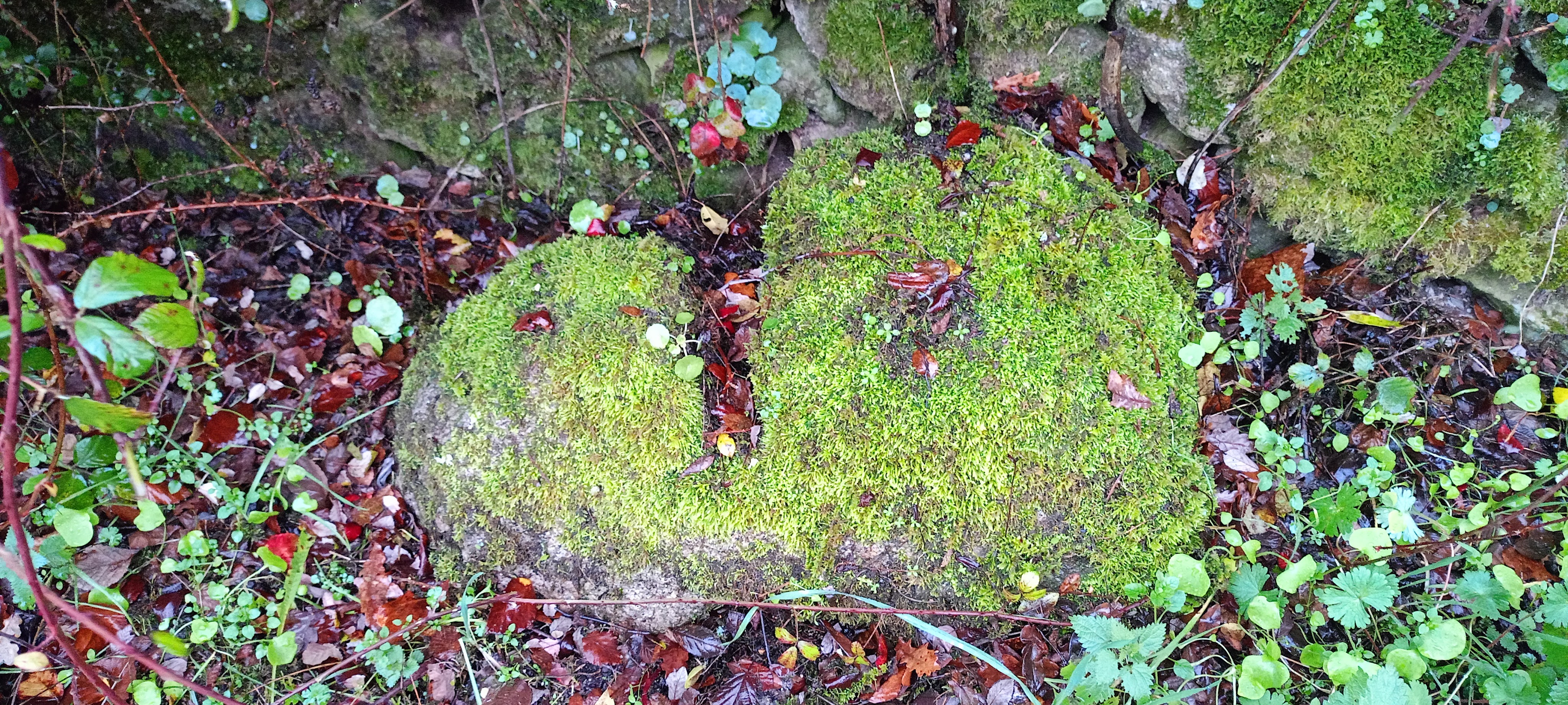
This is a font, or so we have been told. The sources were somewhat unreliable: a neighbour who believes that all artefacts or reminders of the church should be buried, and a priest who had a local reputable for selling off church property. In fairness to the priest who retired some time ago, I have no idea how much truth there was in the rumours, just that they were persistent and had enough substance to make me doubt his motives. The story goes the font was taken out of an old monastery when the monks abandoned it In the twelfth century, it was possible to go into the new church that was built to serve the village. It’s firmly embedded and would need a digger of some sort to get it out; doing so would make our drive unusable. We have left it well alone for the time being. That doesn’t stop me poking about and seeing what I can find, though. Right at the bottom of the visible part, there is an indent that looks as though it gets wider further down, so you never know.
Old doors are fascinating At least, I think so. They hint at a story, a history, lives lived, and battles won and lost. How old do you think these are? We have been told that the carved cross dates this door to the fourteenth or fifteenth century and the moors domination of Spain. We are too far north for the historical picture to be clear, and for Moorish influence to be overwhelming, but they were undoubtedly here. An old location proverb says something along the lines of, “It doesn’t worry us when someone invades, we don’t say much, because we know that sooner or later they will get bored and turn round and go home.” That’s my very poor paraphrase, but you get the point.
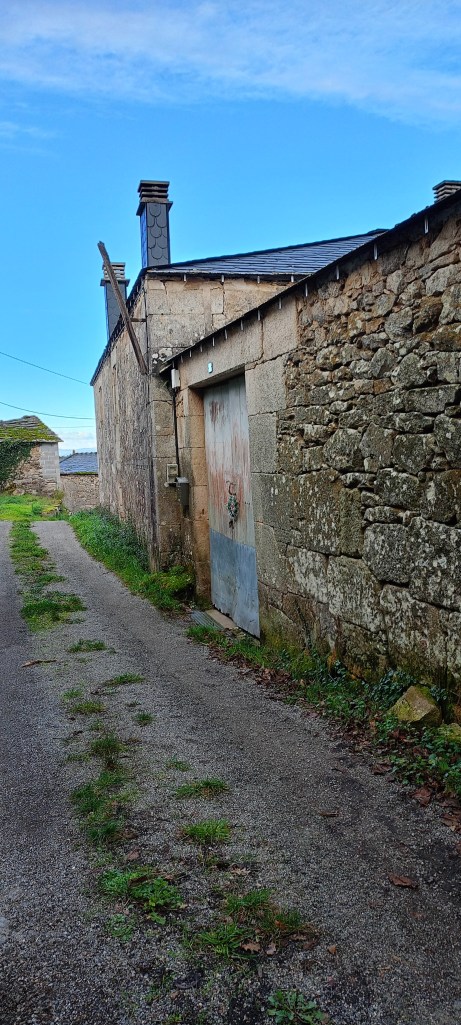
We don’t know how old our house is, but these are its gates. One day we’ll need to change them, but I think there are rather lovely.
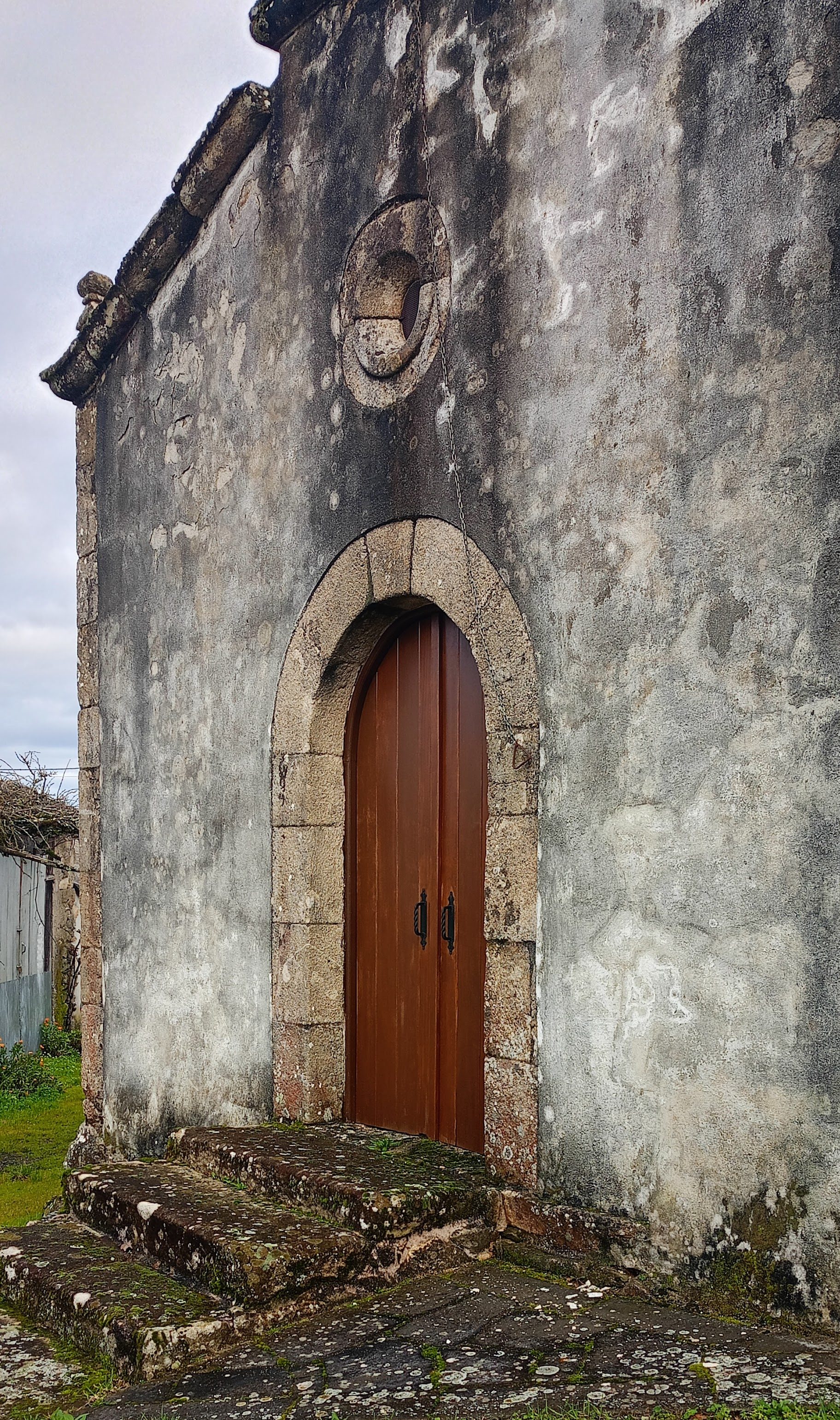
This is our church. It might date from the twelfth century, but in the last fifty years it has had some rather poor renovation work done, making it difficult to tell. I wish I had a photo of the inside, it’s there that you can see how old it is. The village all six houses is the smallest Parrish in Spain. Now, we are joined with all the neighbouring parishes and are effectively part of the parish of Goian, a larger village.
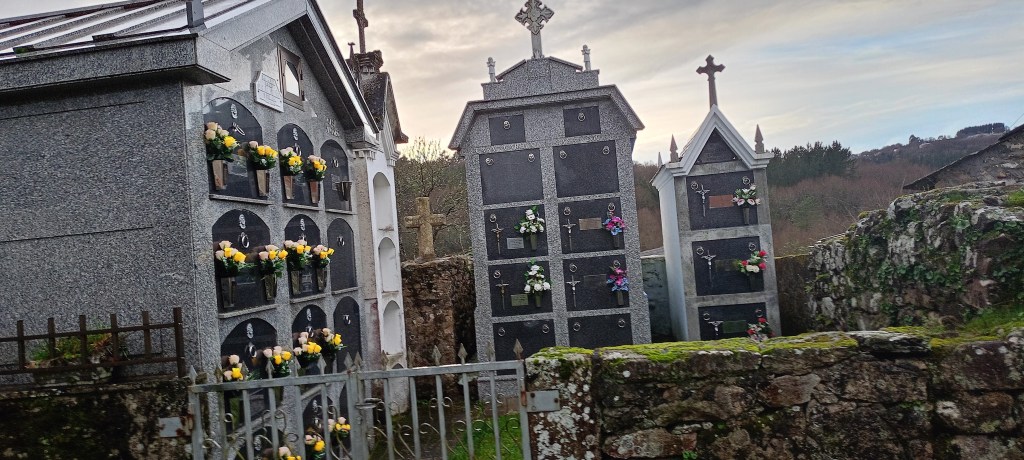
I’m sorry about the wonky photo. The graveyard is modern, the old one was replaced in the 1940s. It took me some time to get used to the fact that loved ones are simply filed away, in their own little slot.
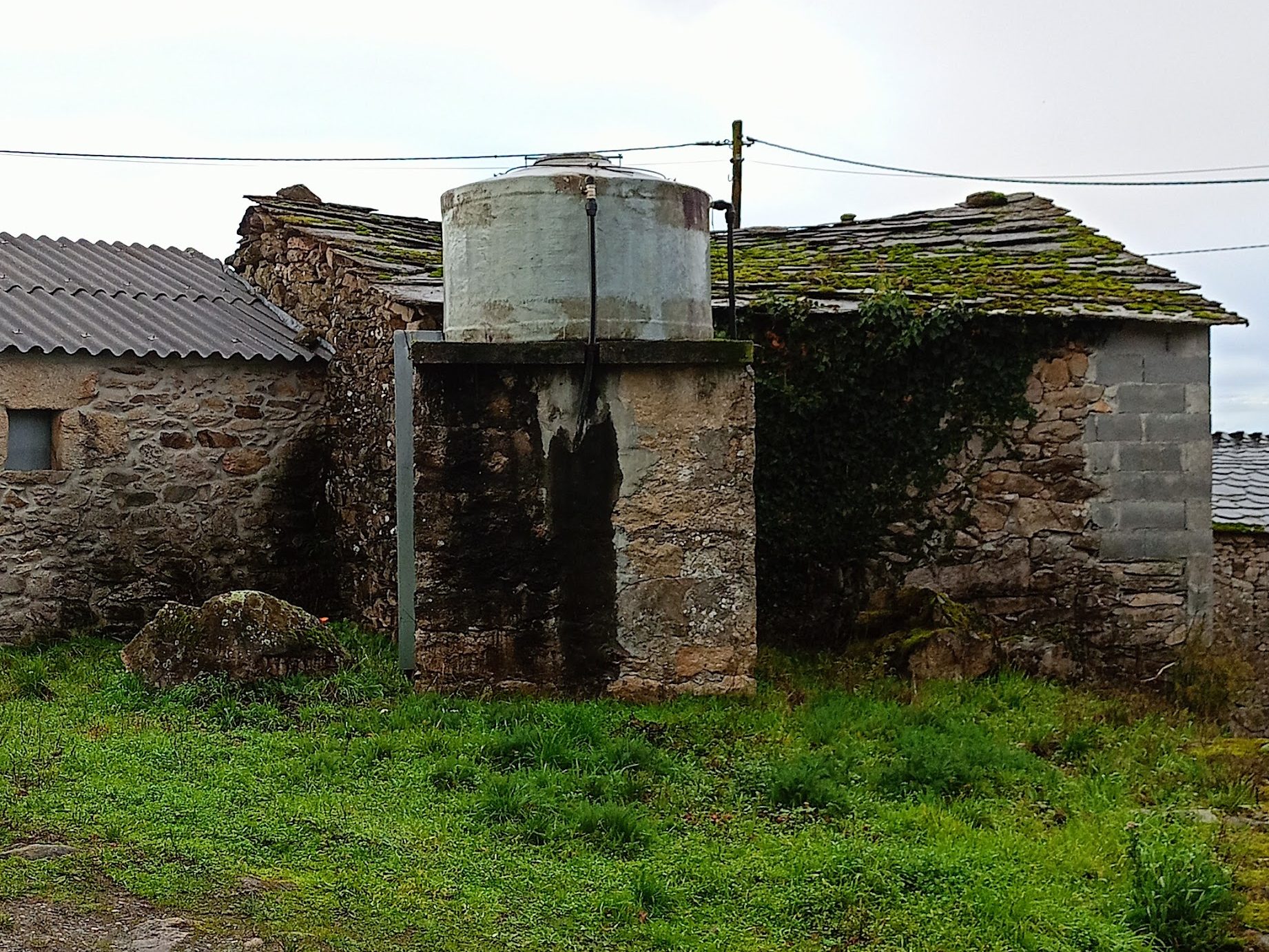
Village water Tank
Lastly, the water store; we don’t have mains water here. All the neighbours have to agree if we want it updated, a near impossible task, which is one reason that it looks so ugly. When we had only been here about a year, the tank ruptured and had to be replaced along with the lead pipes that separated the water to each house. The trouble it caused! Thank goodness our Spanish wasn’t up to arguing, and by the time our neighbours had translated from Galego to Spanish and repeated it twice to make sure we understood, people realised how stupid they sounded, and everything calmed down. We needed to understand so that we could pay our share, I found out later that there were more arguments that we weren’t party to. Necessary repairs were done, but it was never modernised as some of us wanted because of the arguments. Most of us, three household out of the five involved, had their own boreholes dug in an attempt to bypass potential problems in the future. That happened in a village with only six houses, where ordinarily all the neighbours get on extremely well. Imagine what happens in villages ten times the size. That’s why many of these systems have been abandoned, not because they aren’t viable but because no one can agree what to do. I believe in the past either village priest or the village council representative acted as mediator, but with the decline of rural communities, this rarely happens these days.
I was going include my neighbours Horreo, or grain store as they have just finished restoring it, but Horreos are interesting enough for a separate blog. so another time.
I am fortunate to live in such a beautiful and historic place I know that, and I’m grateful. I am guilty, as many of us are, of overlooking the interesting things that surround us in our desire to see the next place that’s gone viral on Instagram. I’m still looking at my resolutions for the year, and one of those is spending time appreciating what I have on my doorstep.
Is it a failed walk or a successful day out? You decide.
This is a story about failure and eventual success. (Kind of) so I’ll start with an explanation and a resolution. About eight years ago, I discovered I had a back problem. Not unusual as we get older, but to cut a long story short, I very quickly began to lose mobility, and normal tasks started to become difficult if not impossible. The problem was that my whole life at the time revolved around my being physically fit. We have four acres of land and a very old rambling farmhouse, doth of which need constant maintenance. At the time, we also had animals who needed looking after. Steve worked as an English teacher; I looked after the animals and the veg garden. As my condition worsened, my world shrank, and the house and the garden both started to look shabby. We still have a dog and a cat, but other than that, the animals have gone, and our veg patch is down to a couple of beds. Two years ago Steve retired, and since then we have brought a bit of order back into our lives, thank goodness. Things are better, but my frustration has grown. I want to be out there, but I also realise that I have become complacent, accepting I can’t do things rather than searching for new ways to reach my goals. For me, two good things came out of this sudden disability, though hate to describe it as a disability, as there are so many people with less mobility than I have.
I started writing and found my passion in life, and the medical treatment I have received has been excellent so the inevitable chronic pain is under control. But my mobility is still limited, and I still miss hiking, days out in the mountains, and my garden. This year I have promised myself that I am going to push that mobility to the limit and see what I can still do and whether I can find a new way of doing things I used to do without a thought. Last year I had an operation on my eye and afterwards realised that some of the fear of falling (because of my condition, I can not stand up straight, affecting balance) came from a loss of depth perspective because of my eye condition. This has given me more confidence to try new things. Sorry for the long list of my health problems and the brackets. I was trying to keep the explanation short, but I felt you needed to know the background before I tell you my failed walk story, and to explain why there might be more of these stories as the year goes on, I will fail often, before I find a way forward, the hard part will be to keep going.
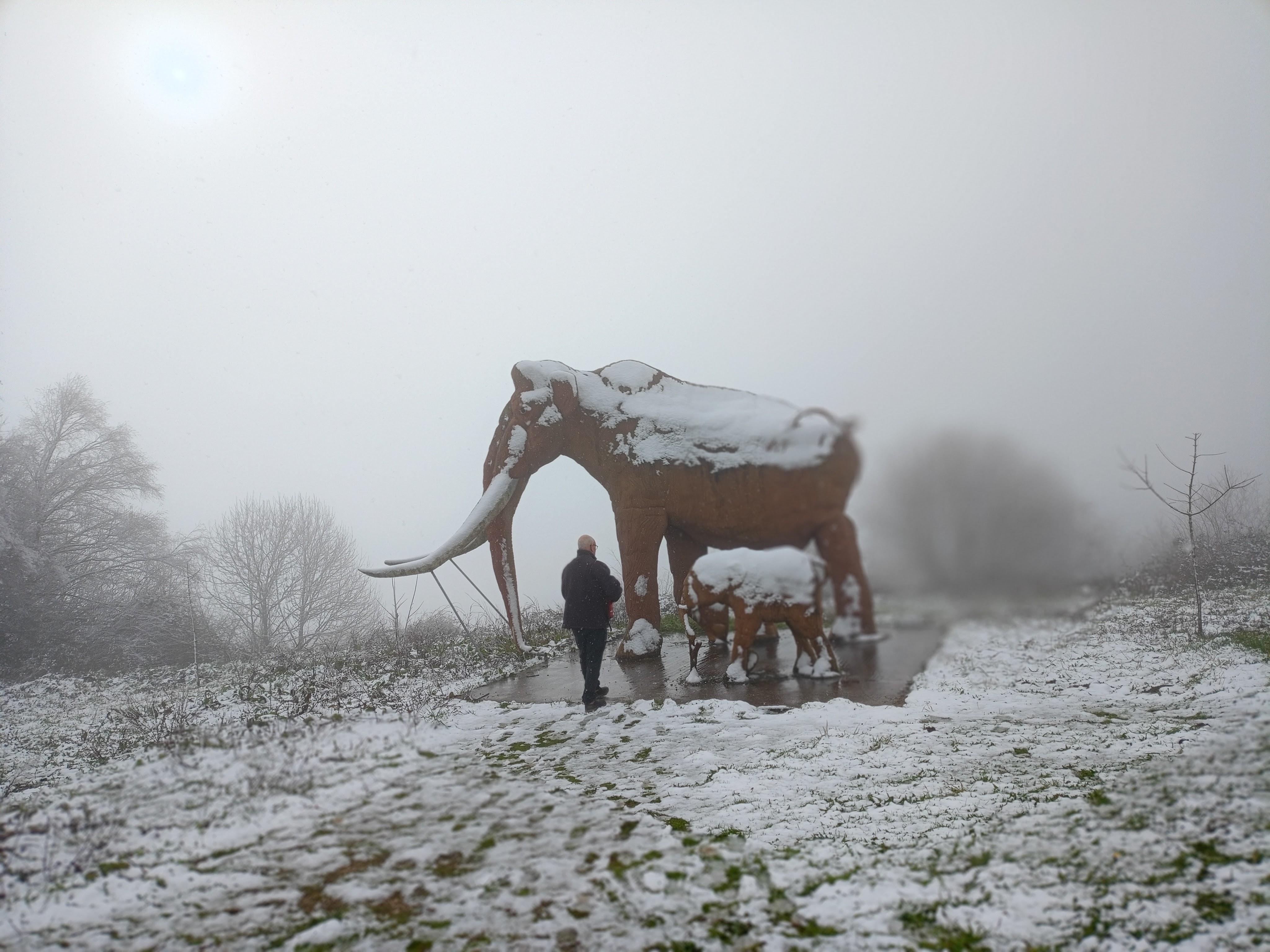
Here in Spain, the sixth of January is a bank holiday, King’s Day, the day when children receive their presents. Christmas doesn’t end until after Epiphany. We decided to go for a walk, so I looked on Google Maps to find somewhere new to visit and found an eleven kilometre walk, of which a section of four kilometres is wheelchair friendly. Meaning I should be able to take my rollator (walking frame with outdoor wheels). I should have looked at the photos then. If I had not, we might never have set off, and that would have been a shame because we ended up having a lovely day. We woke up that morning to the coldest morning of the winter and wet, sleety snow. I was determined that we weren’t changing our plans, so we packed our picnic and our little camping stove and set off. As we drove up into the mountains, the sleet changed into proper snow, and we drove into the cloud, so we couldn’t see much. The Mammoth statues loomed out of the mist in front of us. on the right hand side of the road. They are magnificent even covered in snow. The route we had planned is called the Route of the Mammoth. It should have started further along the road and taken you to two ancient castors or settlements, both part excavated, and then past these statues. The weather was closing in, so we parked by the statues to get a closer look. According to the information. In 1961, workmen in the nearby limestone quarry found bones and teeth of Mammoths proving for the first time that giant mammoths roamed Galicia. The sculptures are based on that find. It was snowing hard, so after taking some photos; We found the path next to the sculptures, abandoning the idea of doing the complete route because the weather was so bad. We started our walk there. That was my next mistake I didn’t check that it was part of the wheelchair – friendly section.
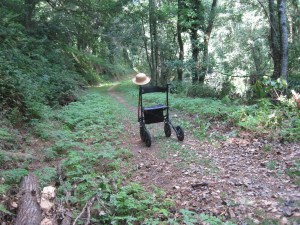
I took this picture in the summer, which explains the “hat” I have included it so you can imagine my wheels
It was hard going; the snow wasn’t cold enough, and kept getting stuck in my wheels, and where the sun hit the path, the snow had melted and refrozen a few times and there was a thin layer of snow and deep mud underneath. In the shade, ice had formed under the snow. I was determined to keep going, so I ploughed on for about five hundred metres, at which point the gradient, which had been a gradual downhill slope suddenly got steeper, I was exhausted by that time by pushing my wheels through the snow, I should have brought two sticks instead. I looked down the slope of the path and realised that if I did get down, there was no way I would make it back up. Reluctantly, I turned back, feeling bad for Steve because it meant he couldn’t go either.
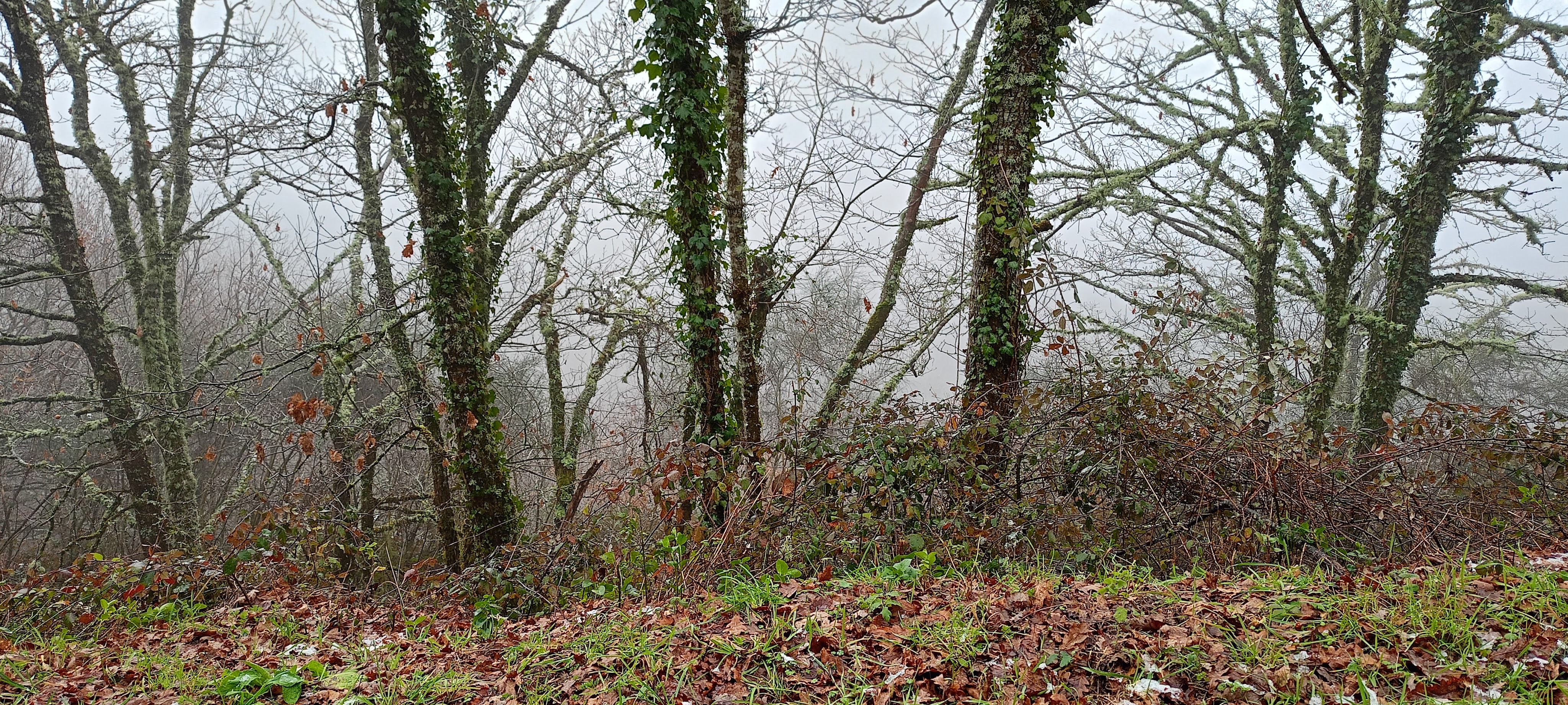
I can’t believe there is no visible snow on this photo. It was everywhere. I had to wipe snow off my camera before I took it.
The climb back to the mammoths was tough, but the views through the mist were great. There was that strange dead silence you get in snow, and the mist was rolling in and out, making the place look mysterious and magical, and the intermittent snow and sunshine covered everything with glittery Christmas fairy lights. Even though the weather stopped us, I felt as though it offered a consolation prize of the sheer beauty of the scene once we were away from the road. I promised myself to return in better weather. We could have had our lunch by the sculpture, but we both had wet feet. (Third mistake: I should have put walking boots on. I have a pair even though it’s been a while since I used them.) We drove downhill to the reservoir, out of the snow, and sat in the winter sunshine at a picnic table and ate sandwiches and soup looking out over the water. It was silent and calm and way too tame. I had another minor victory; the soup was homemade packet soup made of our own veg. I experimented a bit in the summer with dehydrated meals, and this was the first we’d tried on a picnic. It was a successful venture, and I will make more ready meals if we continue with these adventures.
So what is the moral of this brief story? Better preparation for sure, twice as much as I have needed to do in the past. Better gear. Limited mobility means I have to be waterproof and warm even on short, easy walks. I am slower, need more rest stops, and can’t run back to the car. Keep trying. We had a magical day and enjoyed every minute. The only exception was the moment I had to admit defeat on the walk. Build fitness, the stronger I am, the better it is, because everything takes more effort than it used to. I have plans for the future, nearer to home, to car camp further away and try some more walking routes, so watch this space. On a more serious note; Being out in the wild gives me inspiration for writing. In the summer, I often sit in one of the fields near my village to clear my head and let it fill with stories. I don’t always write about it because it seems tame compared with watching the sunset on the top of a mountain. A challenge for me is a bit on the naff side for others, but we all need to get out, and we all need to overcome challenges, so at least we have that in common.
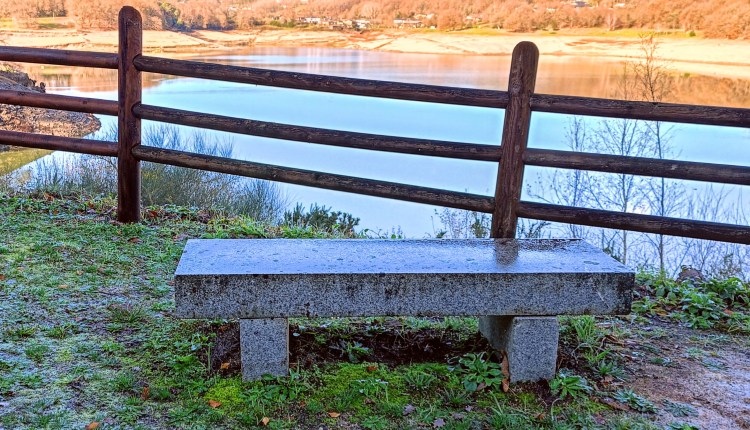
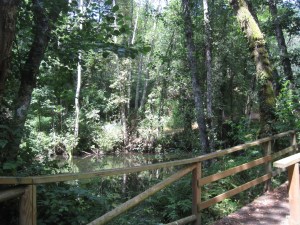
Do you make New Year’s resolutions? I always have done in the past simply because I like to start the new year with a plan. I like the idea of a fresh start, that whatever happened last year is past and that the best is still to come. That last sentence has become more important as I have reached and sailed past retirement age. Too many of my friends want to live in the past; too many of the next generation want to put me in the past, but I still want to live my best life. I don’t want to hang around waiting to die; I want to live while I have life left in me. The thing that convinced me to make a list of resolutions is in the photo above. A bench overlooking a reservoir. The footpath was empty; there were no cars on the road, and we walked in companionable silence for an hour or so. I’m slow, I need walking aids, but I have never stopped loving walking amongst the trees.
The birds, twittering or startled by my arrival, the wind rustled the leaves so that the trees seemed to whisper to each other. The glint of water in the distance adds to the magic. Then we came across the seat, I wished we’d bought a flask of coffee or the little gas stove so that we could stop for a while and dream our dreams with a hot drink. If I want more of those moments in my life, I am going to plan to have them.
The wood burner in our sitting room is broken; the fix is not straightforward, and we have struggled to find a builder with time to do the job. We have a gas fire that uses bottled gas meant for emergencies. It is no substitute for the fire.This situation has gone on for a long time. Over Christmas we had promised ourselves a couple of weeks doing nothing much, so the heating situation suddenly became an issue. I, of course, reacted to this with childish petulance, complaining that it was too cold to sit around. I bundled myself in blankets and complained if I needed to move for any reason. Steve forced me into the car. He told me to work or to come for a walk. Of course, he didn’t say that so bluntly. He is much more understanding than that, but the implication was there.
We went to a local reservoir and had to ourselves and then went for a late lunch. Needless to say, the world was a better place when we returned, and I knew I needed to get out more often. In fact, I knew I needed plans, with a Plan B when Plan A failed. Once motivated, we found solutions for the heating and looked for someone who could install a new fireplace. We both felt better; the cold doesn’t seem as bad when it’s back to being temporary. I am back in my warm study working, but we will spend time together when the fire is fixed. I need New Year’s resolutions so I can control my life and not be defeated by circumstances, and I am accountable if they are here and published. The next problem is what resolutions to settle upon. The problem in the past has been unrealistic expectations. Getting thin and running a marathon, for example, I long for both. The first has been on my list for 40 years, and it’s never happened, and since I need a walker for any distance of 500 metres or more, the second is unlikely. Write a novel every month and earn a million euros, likewise this is theoretically possible but would need some kind of miracle to achieve. Those are the type of resolution I am determined to get rid of. So this year I have made a pre-New Year resolution to be practical and to set achievable goals, including those involving less productive work, not more. I am planning for moments when I have time to stand and stare.
Resolutions
Writing, Finish my current WIP and complete the next book on my list. “I am nervous about that as it is not a crime novel. More about that in the future. Improve the formatting and create the hardbacks of the Camino Murders series. Put them into Amazon’s virtual voice audio. More about that in a future blog. Learn to make short videos Blog more frequently simply by planning them in advance. Gradually increase marketing efforts.
Health and fitness and home life Go for a walk five times a week, and make at least one of those walks include a place that I can stop for coffee and fill my mind with the sounds of nature, and sight of God’s creation. Lose the weight I have put on over Christmas (I haven’t checked, I am assuming a weight gain.) plus 5 kilos. This is because my blood pressure is a bit too high and will mean I can avoid taking more tablets. It is not an attempt to be thin for vanity’s sake. That was never on the cards. Spend more time gardening, and less time writing. I hope this can be achieved by organising my time better, not by racing around like a mad thing. There is something magical about having your hands in the soil, and that’s when I get the ideas for stories or solve plot problems. We have been experimenting with planning meals and cooking only once a week. We cook everything from scratch, which is time-consuming, and sometimes time constraints mean we don’t make healthy choices. With a plan in place, the hard work and thinking is done. This means that either of us can get meals ready, and it frees up my time. One day-trip a month even if the weather is vile. Putting it on the calendar and then going whatever else comes up.
Hobbies and Crafts Finish all WIPs Clear my mending, recycling pile. There is a year’s work in those; no need to add anything else.
That is it for now if I think of anything more, I’ll edit it in. What about you? Do you have resolutions if so why. If you don’t, why not?
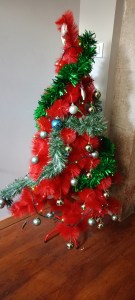
Christmas has officially started in our house, or it will when Steve arrives back from his Spanish lesson. We are cooking today — some lovely treats — for our Christmas break. Of course, we are retired, so maybe Christmas break is a misnomer, but it doesn’t feel like that for us. It feels like a holiday, a change in routine, where we don’t worry about healthy diets or financial budgets or things that need fixing. Here in Spain, Christmas it a quieter affair than in the UK, more church and family oriented, with a family meal on Christmas Eve and a quiet family holiday on Christmas Day. The big celebration and the commercial one in the past was Epiphany on the 6 of January or Kings Day, when the children get their presents. That’s changing, though. American TV, the reliance on tourism and a need to boost sales in midwinter mean that more and more towns are making more of the Christmas season. Starting earlier, and going bigger, and having light displays and Christmas markets. Christmas seems to last forever now because no one can give up the Epiphany celebrations. Historically, in Britain at least, Christmas started on Christmas Day and ended on January 5, the day before Epiphany — the twelve days of Christmas. A Christian celebration that joined together existing and much older festivals. It was the main or only holiday for workers and was eagerly anticipated.
Overlaying that are family and community traditions. Our family traditions have changed over the years. We always put the decorations up on the weekend after Steve’s birthday, that hasn’t changed. When the children were small, Steve and the boys put them up together, a kind of boys thing.with each other competing for the most interesting homemade ornaments and later for the most garish anti-themed Christmas trees. Steve still puts everything up, even now that the boys have their own families. He misses those times. He loved playing Santa, making up stockings and organising gifts.
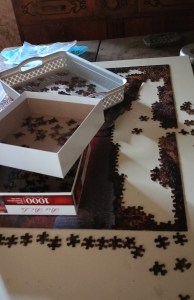
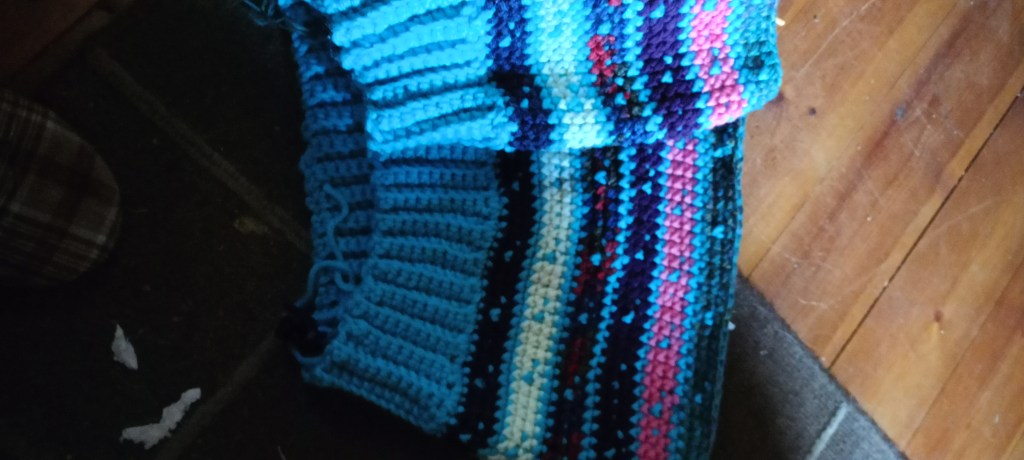
My job was cooking, and it still is. Steve’s parents always came on Christmas Day. So I always planned a big meal. They loved to see the boys’ open presents, and they loved to play games with them in the afternoon when we were tired and too full of food to do much. Steve’s mum always thought there was too much of everything and she was right, of course. There was, but that was the point. We were a not particularly well off family and it was the one time of year when we could, with good conscience, have too much. Besides it meant we could invite other guests, single friends or people who for some reason weren’t having a family Christmas that year, I didn’t look for extra people but often found myself inviting friends who told me the would be on their own and I loved it the more the merrier. For several years, a group from our church cooked a Christmas dinner on Christmas Day for anyone who would otherwise be alone. That was a lovely tradition to be part of, and it was something I was able to give. Most the year we were too busy and too cash-strapped to be as generous as I would have liked. Another tradition that started with the children and that we still follow is watching terrible films. Not the big Christmas hits, although we watch those as well. But sentimental romances. You know the kind of thing; a big-city girl discovers small-town magic and the man of her dreams. Cheesy, I know, but somehow it adds to the magic. I crochet, and Steve does a jigsaw while we watch.
That’s another tradition of mine: a Christmas craft project to get on with while we watch TV. I have to confess that I don’t always finish these Christmas projects because by the time the new year comes around I have so many plans I can not possibly get them all done. My last year’s project is still sitting on my study shelf waiting for me to finish it. Perhaps my New Year’s resolution will be to finish everything I’ve started.
oplus_32
This afternoon I’m making herb and spice mixes. Mixed spice for a fruitcake, a herb mix for stuffing, flavoured butter to go under the turkey and herbs to mix into the stuffing. Maybe even a mix for mulled wine. (Last minute evening edit: I have a mug of mulled wine in my hand a great success.) I was thinking about it last night as sleet was flinging itself against the skylights in my study. Boxing Day has its own traditions, of course. We always breathe a sigh of relief that the frantic stressful bit (Self imposed and I always want that part) was over and we had a family day. Left over Turkey with chips for lunch and lots of playing games and watching films and a boxing day walk when the boy’s were older they often played football so the walk would be Steve and I. Boxing day was always my favourite day because the pressure was off and could relax.
Typical family traditions here in Spain differ from typical UK events, I expected that but when we moved here, I was surprised to discover that only British people enjoy Christmas pudding, mince pies, Christmas crackers, and Boxing Day, as people of other nationalities have never heard of them. I made mince pies for my neighbours when we first came; they appreciated the sentiment far more than the pies. Here, El Gordo, the lottery, is part of the tradition. The draw is today, the 22. Families buy each other tickets, and the draw takes all day. It is one of the most-watched TV shows in Spain, and it has a theatre-style production. For weeks, people will ask each other if they had won anything, or knew anyone who did. We are not lottery-type people, but we buy a ticket now. so that we can be a part of the conversation; it has helped us to integrate. Our neighbours sometimes give us a ticket as a Christmas gift, and they tell people we are OK because we do El Gordo and we eat pulpo. (Octopus.) What are your traditions? Have they changed over the years? Let me know in the comments and, above all else, have a very blessed Christmas and a hopeful new year.
We always celebrate birthdays in our house, sometimes extending the celebration over days or even a week. Small pleasures have replaced expensive gifts. A day at the beach or in the mountains, an enjoyable meal out. Time to read books or do jigsaws, and eat chocolate or treats — anything that breaks up our normal routine. Steve’s birthday is extra special because it marks the start of the Christmas season. We wait to decorate the house, buy presents, or shop for Christmas food until after celebrating his birthday. The anticipation makes up for the miserable weather, which is almost inevitable.
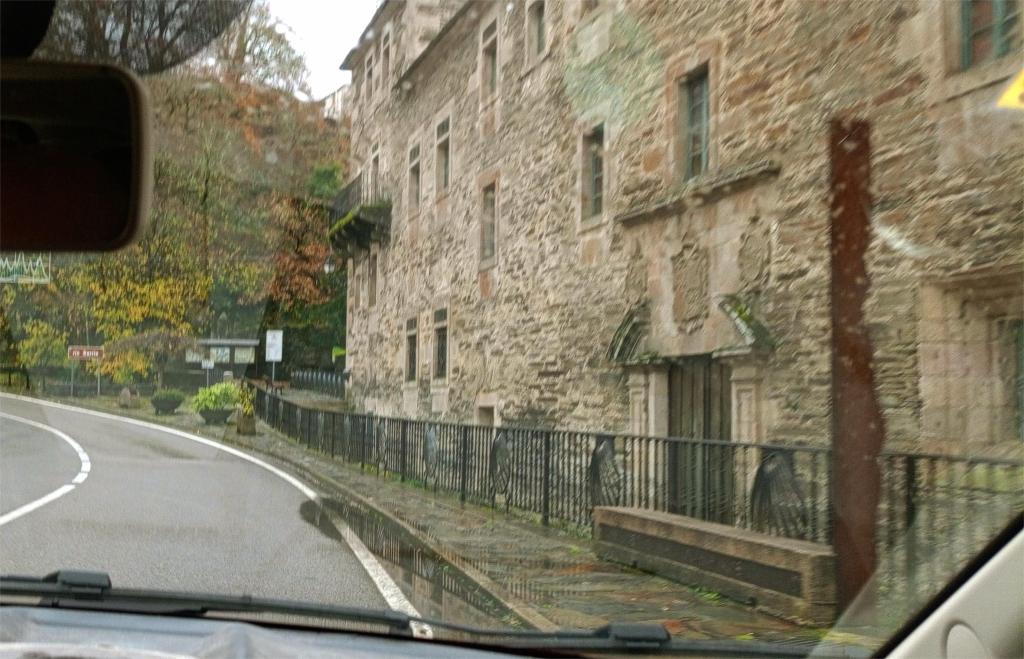
When we set out not a glimpse of sunshine brightened the day. Rain bounced off the lane as we walked to the car and I was already cold by the time the heater kicked and dried our clothes. Had it not been a birthday treat we might well have changed our minds. The friend who recommended the restaurants raved about the spectacular views as well as the food. We set out early, planning to stop in Samos for a coffee on the way. Samos is a pretty village with a giant monastery. It is on the Camino de Santiago and summer it buzzes with people. The tables from bars and cafes line the narrow streets. Today, on a cold wet winter morning, it was deserted and the cafes on the main road were shut up tight.
Samos . Driving past the monastery
On a better day, we would have stopped and walked along the river path, admiring the Monastery gardens and the stone cottages set against the browns and golds stretching up the sides of the narrow valley to the mountains beyond. The rain bouncing off the car bonnet and the whirr of the wipers fighting the constant downpour encouraged us to drive on through. Once past the village, we turned right, steadily climbing into the mist. The rain slackened, but as it did, the cloud descended. The road was surprisingly good many roads here are single track, and covered with-rain filled dips and hollows. This was wide and smooth and completely deserted. The occasional house came into view, but in the mist there was nothing to see but trees or the gorse bushes that line the moors.
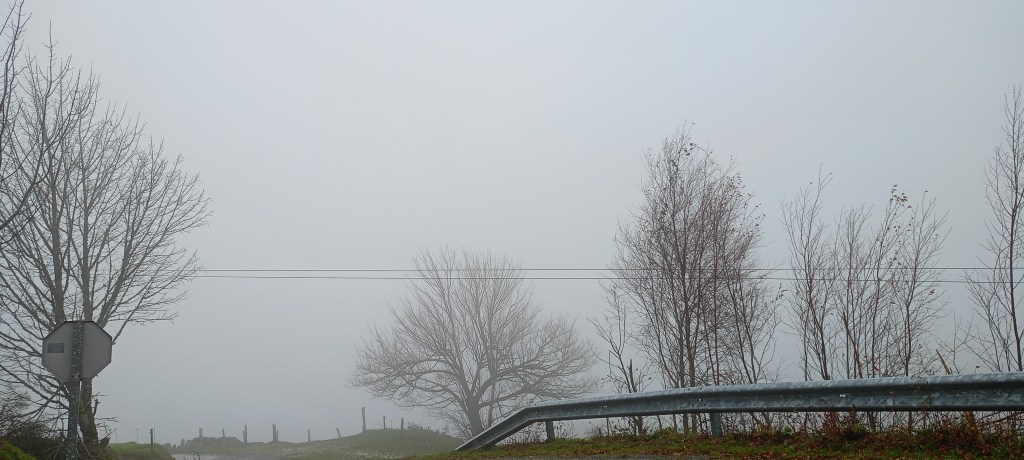
Driving into the cloud
The photos don’t do justice to the strange shadowy shapes looming out of the mist or the deadness of the sound as we wound upwards.
Mist blocked the view
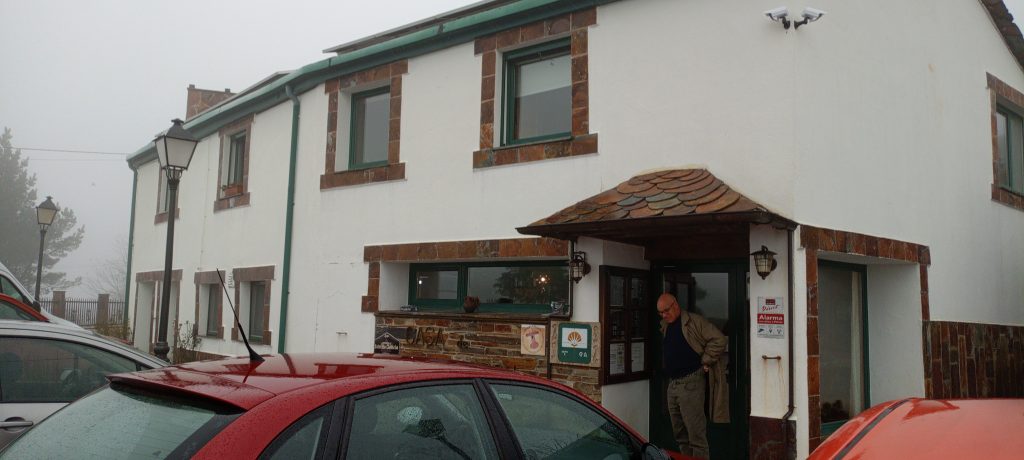
We came upon the restaurant suddenly, positioned on a roundabout in the middle of nowhere. Steve slowed the car.
“We are early,” he said “The table is booked for half past, but the the dining room won’t be open yet.”
There were cars, the first we had seen since Samos, so we could have had a drink and waited in the bar.
Casa Aira de Panton
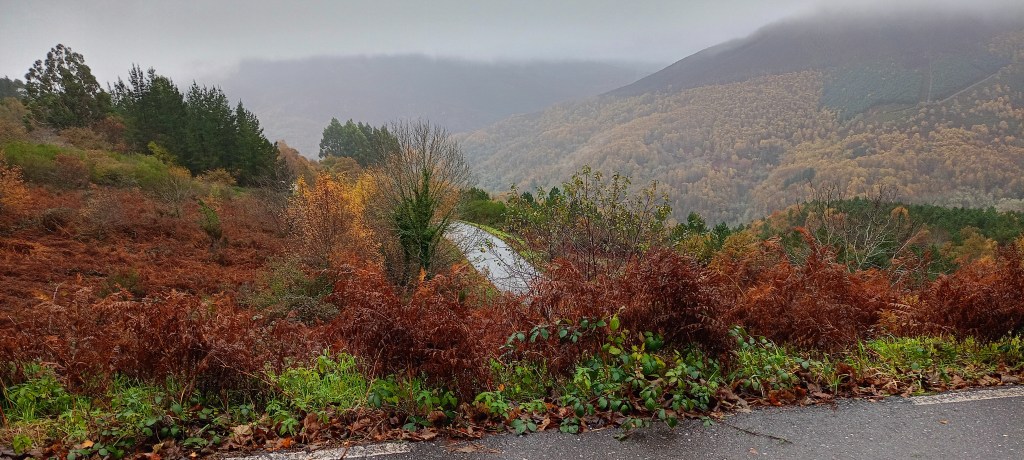
The sky had cleared, or maybe we were now above the cloud. I wanted to see where we were and get a sense of what the area was like. I had felt rather than seen the magnificence of the scenery around us and wondered why we had never ventured here before now. The mountains rolled on, the colours only getting more and more impressive. The mist cleared enough for us to see the winding road ahead twisting and turning into another valley.
Caurel mountains
We turned around about halfway down and returned up the steep slope to the restaurant. The parking area was already full, so we took the last space and went inside. A stone by the roadside told us we were 1100 meters above sea level. And I wished once again that we could see the view.
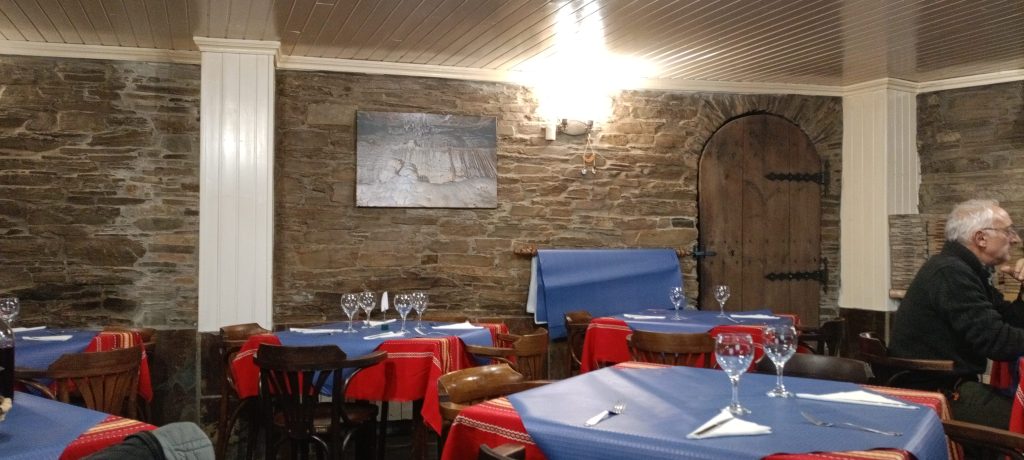
It was the kind of place that travel writers or video makers love. A cosy bar with a fire, and a group of men playing cards round a table in one corner. The man at the bar showed us the dining room at the back. Another fireplace dominated the room with a large open grill beside it. The walls were stone, and the dark wooden tables packed closely together. Was the same colour as the beams that stretched across the ceiling. The waitress, who we later found out was the owner, led us to a table by the radiator. I was grateful for the cold air, and driving rain outside. I faced the grill but was too far away to feel its heat.
oplus_0
Only one other table was occupied, but that changed quickly; by the time our starters arrived, every table was taken. I was the only woman other than the waitress. Not that unusual here and often a sign that the meat is good and the portions generous. I wondered where they all came from we had just driven eight kilometres from Samos and five or six in the other direction and not seen a soul. The choice of main course was small: grilled meat, grilled steak, or grilled sausage. Today the sausage was homemade chorizo. We had gullas, (imitation baby eels real ones are way out of our price range) and mushrooms with Serrano ham to start, grilled meat with salad and chips for the main. The meat and chorizo kept coming until we said stop.
The grill was full of meat and sausages, and the owner walked round the tables with the meat on a huge wooden board, heating onto plates. It was impeccable. The best chorizo I have ever tasted is so good that they announce on social media when the new season’s chorizo is ready. The meat is local and seasoned to perfection. Everyone in the room had the same. The bread was local and warm, and our bread basket was never empty. The desserts were homemade and looked amazing, but there was no way I could eat one, however good they looked. I would recommend a visit, for the ambience and the food. The Facebook page is Casa Aira Padron
The weather cleared on the way home, much to my relief as I had taken over the drive. The colours of the autumn leaves sparkled like Christmas ornaments, and I daydreamed about coming back one day and spending a night parked in a lay-by, spending the evening watching the scenery as dusk fell. I have these flights of fancy from time to time. I didn’t think about my story once, and, as always, the break from writing refreshed me. There is a balance I find when I am in the middle of writing a new book. A day away is good; three days away is a disaster, and the story begins to unravel in my head. I guess it’s different for everyone. What do you think?



 Abigail Thorne