At last I have reached the final five resolutions. The nice thing about this time of year is that everything represents potential. We know that spring is coming and the days are getting longer, but we don’t see it yet. Instead, we look hopefully for the first buds. We peer at the sky in the evening to see if it is lighter than the day before. There will be rain, snow, and cold before the long days and first flowers arrive. Now we have hope in our hearts. The year is not over; it is just beginning.
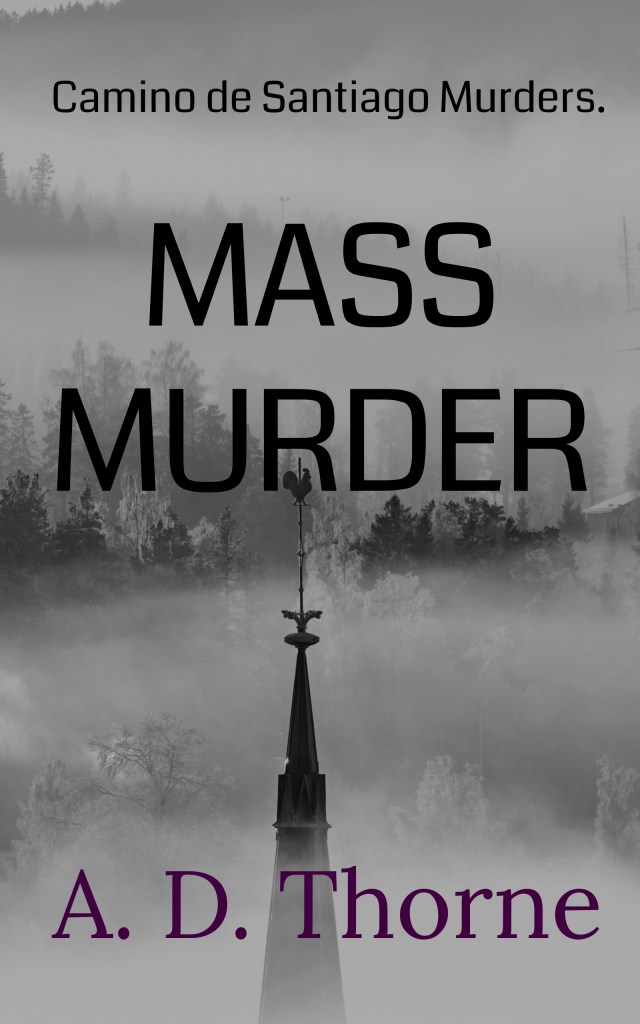
1) Predict and prevent real crimes. Use your writing to foresee and stop actual crimes before they happen. (Tongue in cheek) The computer finds this either amusing or impossible. There is irony in this, yet it lies at the core of a crime writer’s work. I ask myself the question ‘what if?’ before I plot a book. This is especially clear in my book Mass murder. I ask what happens if the church hides child abuse or the police don’t act decisively enough. What if it pushes one victim over the edge? Develop a believable criminal and offense that could happen.
2) Solve a real life mystery.Get Inspiration by solving a local mystery or cold case. This idea hadn’t occurred to me; it’s excellent. I don’t think I could negotiate the Spanish or Galician to tackle a local one. (before anyone comments, Yes I do speak Spanish, and use it to talk to neighbours, etc.) But negotiating cultural differences and Galician, most people’s first language, make tasks, like the legal system extra hard. Search for real crime TV shows and follow them to gain a deeper understanding of the processes involved.
3) Write in every known language. Write and publish your book in every know language. (Tongue in cheek) That’s aspirational; I’ll translate a book, eventually. AI’s advancements suggest future possibilities for everyone. For now, I’m not getting into the AI argument for serious things and nor can I afford a translator. Save this one for the future, it won’t happen anytime soon.
4) Embrace the cliches. Write a story featuring every crime fiction Cliche you can think of. Nice idea! I have already planned this year’s projects. However, a cosy mystery series based on popular tropes is a possibility for the future. Another one for the back burner. Unfortunately, I’ve planned three plots already. I have enough inspiration to last a lifetime.
5) Make a detective fall in love with your villain.Write a story so compelling that real-life detectives admire your fictional antagonists. (Tongue in cheek) I cherish this one so much it’s become a lifelong writing aspiration. Improving my villains is already on my resolution list. I now have a clear idea of how much I will push it.
Well, there you are folks, you have my resolutions. I’m so pleased with these. I’ll update you on my progress at the end of the year. I have a lot planned for this year. Keep your ears pealed for news.
Here are the next five resolutions. The most interesting are the tongue-in-cheek ones. Turning those into something possible and practical has been inspiring and I am looking forward to my writing year.
1) Invent a completely new crime genre.Create a new sub-genre of crime fiction that becomes an instant sensation (Tongue in cheek). Crime is one of the most successful genres, in that people never tire of it. There are two conflicting issues that any crime writer has to deal with.;The first is how to satisfy readers with enough well worn tropes so that they come back for more. The second is how to keep your writing fresh and vibrant without losing readers. It can be a delicate balance. I have recently been reading several classic crime novels to help with my research. I wanted to know why some writers’ work has stood the test of time. I have noticed that fashion plays a big part in popularity. Although I am certain that nothing is new. I have been thinking about new future series and what sub genre I should opt for. So watch this space I’m ready for a change. Research sub-genres and classic novels to give me options for future series.
2) Attend a writing workshop.Improve your skills by attending workshops and conferences. I would love to, but here’s the rub, they cost money. Writing can be extremely expensive if you’re not careful with your spending. More people want to write books. More people want to charge money to teach you how to write a book. If that sounds cynical, it’s not meant to be. I need to earn more money before I do something which, although helpful, is a luxury. I have already found two that interest me both close enough to my home to be feasible. Earn enough money this year to book a workshop or conference for 2026.
3) Never use any crime cliches. Write an entire crime novel without using a common trope of cliche. (Tongue in cheek.) I spent a long time thinking about this one. Readers like tropes, they like something familiar to guide them through your novel. So there is a danger of losing your reader. A good trick would be to turn some of the most cliched tropes on their head with good story twists. My desire for originality and distinction in my stories means I’ll postpone my new resolution. Keep thinking through cliches and tropes in order to write more original stories. My stories for this year are all planned, so this will be one of next year’s resolutions.
4) Experiment with different POVs.Try writing from different points of view to add depth to your storytelling. Funnily enough, I’ve been thinking a lot about this. Classic Crime novels I’ve read mostly use a third-person omniscient narrator. Modern novels use a close third-person or first-person perspective. I’m not sure I’ve got the nerve to move away from current fashion. Short stories are a good place to experiment so , you might see some short stories from me soon. I quite like the idea of a narrator. I might also give 1st person a go. I love it for short stories but have never done a full novel, so these resolutions stand exactly as written. I’m determined to experiment.
5) Find a real-life criminal mastermind to collaborate with.Co-write a novel with a notorious criminal mastermind (Tongue in Cheek) How am I going to find a criminal mastermind? Do I already know one? Do I advertise, and if so, what would their credentials be? This brings up so many questions. I you know of a criminal mastermind who needs someone to help tell his or her story please get in touch. Keep my ears open for opportunities to talk to criminals and either listen to their stories or offer to work with them.
Here is part two of a crime writers new years resolutions I hope that you enjoy them.
6) Read more crime fiction. Immerse your self in the genre by reading a new crime fiction novel every month. (Serious) Reading in the daytime makes me feel guilty, because I at the back of my mind Is the list of other things I need to do, Either house work, garden work or writing work. Now as I sit here thinking this through, I wondering if I dare schedule a reading hour into my normal work day. It feels scary but do you know what I am going to do it. Read more crime fiction. Spend at least 1 hour a day reading crime fiction, preferably the sub genre I plan to write next.
7) Create a perfect crime with no Plot holes. Write a crime story so flawless that not even a seasoned detective could find a single plot hole. (Tongue in cheek) Believe it or not, this is what I aim for every time. It is about planning and editing rather than writing and I have been working on both. Pay close attention to planning and editing in order to produce a more satisfying experience for the reader. Review my planning and editing techniques in order to eliminate plot holes. Now I’m wondering if I’m setting myself up for trouble by making this public.
8) Join a writer’s group. Engage with other others writers for feed back support and motivation. (Serious). There is a story here. When I first started writing, a friend and I formed a writers’ group in our area because almost every ‘learn how to write’ course, book, or video will tell you how important it is. It did not go well. I was nervous from the start because I am not a group person, and that became obvious at once when I failed to be the easygoing bubbly, let’s all help each other, type of person needed. People seemed to enjoy picking holes in everyone else and most of us felt both put down and attacked and the answer seemed to develop into attacking others before they attacked you. The COVID lock down came as a blessed relief and the group never restarted. However, my friend Jackie and I continue to meet regularly and that has been fantastic. We have learnt so much by working together in each others weak areas. She doesn’t write crime though, so I possibly would benefit from another crime writer to talk to. Continue meeting with Jackie. Develop a solid timetable of learning for the year to come.
9) Make every reading guess wrong. Ensure that every single reader is completely surprised by the twist ending. (tongue in cheek) Now this is an interesting suggesting, I have never consciously tried to have a twist ending that is a complete surprise to the audience. I am more of a wind back-and-forth kind of writer, but it would be good to write at least one book that has a really good twist. Plan a new future novel with a surprising twist ending. Research different ways to surprise the reader and produce a brilliant twist ending.
10) Create stronger villains. Develop more complex and compelling antagonists. This should have been on my list, even without AI, in many ways the villain is more important than the protagonist who never really changes. I always intend to do more research but never do. Look at my antagonists and see how I can make them more compelling. Possibly one for my writing days with Jackie.
Here we are with five more resolutions. I’m so glad that I have done this as it has given me some concrete ideas for the year. I hope that you also find something that inspires your writing journey.
This year I had no plans to make any resolutions, but several things have altered my perspective. My health has taken a nosedive yet again, so I will take whatever steps possible to improve things involving boring tasks such as losing weight and increasing physical activity. However, some issues needed medical attention, so changes will occur with the doctor’s advice. However, we will delve into that later. My author friend Jackie Is coming on Friday, for one of our regular writing days. And she is keen for us to set goals for the year and review last year’s achievements. This is panic territory for me. Every year she achieves a load of stuff. Check her website. She has two wonderful new books, either out or coming in the next month, which are worth looking at here – Jacqueline P Vincent . She is full of ideas and enthusiasm. I usually sit biting my cheeks to avoid self pity while she lists her achievements, knowing that my writing journey is going backwards. I can’t do much about my lack of achievement last year, so I thought I’d preempt things and write resolutions for the coming year in advance. So I sat, And I sat some more and gazed at my keyboard.
I tried a pen and then a pencil Went on a walk and still my mind remained blank. I finally asked my computer for a solution. I asked for ten practical and ten amusing resolutions for a crime writer. Here is what it came up with. I included the practicality of each resolution and the altered version.
1) Write every day.Commit to writing at least one page of your crime novel each day. (Serious) Sounds easy and obvious, but I’m wriggling already. What does every day mean? Does that imply I never have a day off? What about Christmas or my birthday, or Sundays, or days when we want to take a picnic in the park? Eek. What does it mean by write? I mean, when do I edit, or do marketing tasks? Objections run through my mind like a herd of reindeer avoiding Santa. So my verdict is…. I need to rewrite to make it work for me. 1) Write most days.Commit to writing at least half a page of your crime novel each working day. Devote the remaining hours to editing and marketing. Editing counts as writing when approaching deadlines.
2) Write a crime novel in a single day. Finish a full length intricately plotted crime novel in just 24 hours. (Tongue in cheek). This got me thinking I know it’s a joke resolution, but I wonder how much I could get done in a 24 hour writing sprint. Very often it’s these sprints that trigger a sub conscious creativity which doesn’t happen, in normal planned writing. It can overcome procrastination and writer’s block, or so I’m told. This isn’t as silly as it initially seems; Nanorimo’s popularity amongst authors indicates this. 2) Plan two days a week in the next year to do long writing sprints and see where it takes me.Give myself a fixed period to write with a word target and see what happens.
3) Research diligently: Spend dedicated time researching police procedures, legal systems and forensic science. (serious) Research is important, but it takes time and if you are not careful, it eats into writing time. Because it’s easy to disappear down interesting rabbit holes. This could be the time to prioritise efficiency over effort. 3) Make a research folder and keep it organised. Instead of doing separate research for each novel. Make a folder including both general and specific information. Design an indexing system ensuring easy access to all necessary information for the next novel, avoiding duplicated work.
4) Solve a real crime while writing about it.Simultaneously write about and solve an ongoing real life crime case. (Tongue in cheek.). I don’t suppose the opportunity to do this would ever occur in real life, but it made me think. What if I could follow along with a crime case on the news and use that coverage as a basis for my research for a novel? The two would not happen simultaneously, but it might help me with some realism to my stories. 4) Look for a news story involving an ongoing crime and research itincluding motives and psychology. Plan a novel using the information gained. This will improve my writing I’m sure so I need to pick a time between books.
5) Outline Thoroughly.Create detailed outlines for your plots to ensure consistency and prevent plot holes. This one is perfect timing. Jackie and I have dedicated almost a year to mastering this skill to enhance our storytelling, but I haven’t had the opportunity to apply it yet. This one is remaining unchanged. I have always been a plotter, but we have studied books and watched endless you tube, to help us each to find something that works. It’s been hard work, but I feel as though I have learned so much about storytelling in the process. I recommend John Truby and his anatomy of a story. Not an easy read, but so useful.
Like most people I have a love hate relationship with Ai, but this time it really did work out well for me, Of course I changed almost everything suggested, but it gave me a basis for some really good ideas going forward into the New Year. I like having tools that I can use like this. I also discovered that my fear of failing stops me from doing so many things. You know as I sit here typing this, I realise it’s not a fear of failing. It’s a fear of looking stupid or being laughed at. Does anyone else feel like that? Or maybe it’s just me. Back soon with more resolutions.
I have never been afraid of getting older in fact until now; the benefits have outweighed the negatives. Even the back problems I have suffered in the last few years haven’t seemed insurmountable, just annoying. Then at the beginning of summer, in the first week of summer sunshine I got covid and everything changed. I have had all my vaccinations, so had no reason to believe it would be bad. It wasn’t bad in the sense that I didn’t need hospital treatment, but I am not completely recovered 3 months later. I have spent whole days in bed or lying on the settee too exhausted to move or gone for a walk and spent the rest of the day in bed. For the first two months, my brain felt as though it was full of fog. I couldn’t think clearly, I certainly couldn’t write, or sew, or crochet even mending was beyond me. At the moment I have more and more good days where I feel normal. Great, that sounds positive you must be recovering, you may be thinking. Well yes, but then we spend a day in the garden or go out for a long walk, and for the following two days, I am back to sleeping all day. The worst effect has been psychological, it’s affected my confidence. The advice, anecdotal and medical is to wait it out because it will improve. So the point is that at the moment, I feel old and useless and cannot guarantee when I will get anything done. This nicely brings me on to my work in progress. I am hoping it will be out by the end of January, but for the reasons stated above, I do not dare to put it on pre- order until I am confident that it will be ready by then.
The book, as you can see, is called Bitten in the Bathroom. Esther investigates the Murder of the local newsagent Martin Munro. The trouble is that the four suspects are people she likes, and she hates the thought that one of them might be a murderer. Will she use her head and put logic above emotion? Only time will tell.
I have also re edited the book of herbal medicine which will be published under the new name of Murder in Matlock and act as a prequel to the Browns books series. So look out for both of those.
Writer almost in the wild.
I missed the summer, so sadly, have spent little time outdoors. Another thing which had a negative impact on both my mental health and my ability to be creative. I’ve been longing to get outdoors again and spend time in the woods with my notebook. Until I can do that, I am making do with slow dog walks,
I was hoping to find ceps along this path, but only found parasols. We left them as I knew there would be plenty in the field below my house. I dry Parasols but, unlike Ceps, normally ground them into powder to use in one of the seasoning mixtures we use regularly. They are mild in flavour but in a seasoning have a lovely umami quality.
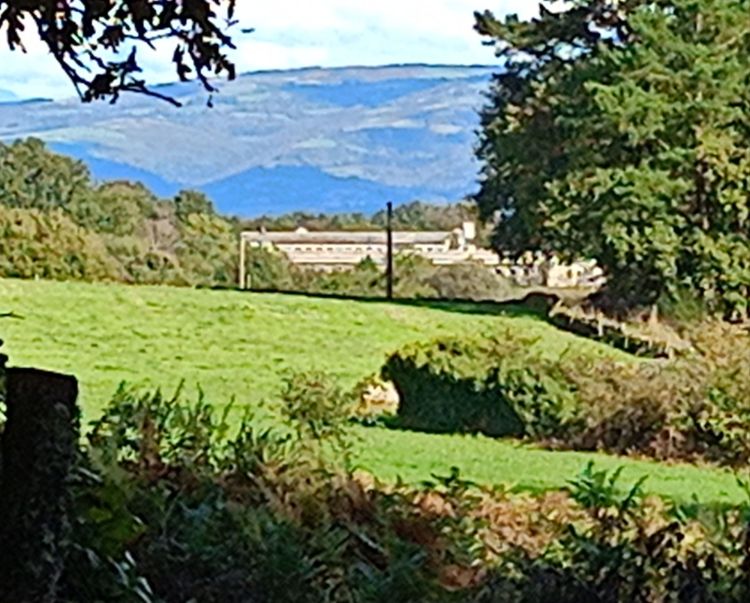
This is the farmhouse we passed today. It was an old granite house with barns attached, but must once belonged to someone very wealthy and it was enormous with ornate stonework and spectacular views. The photo doesn’t do it justice.
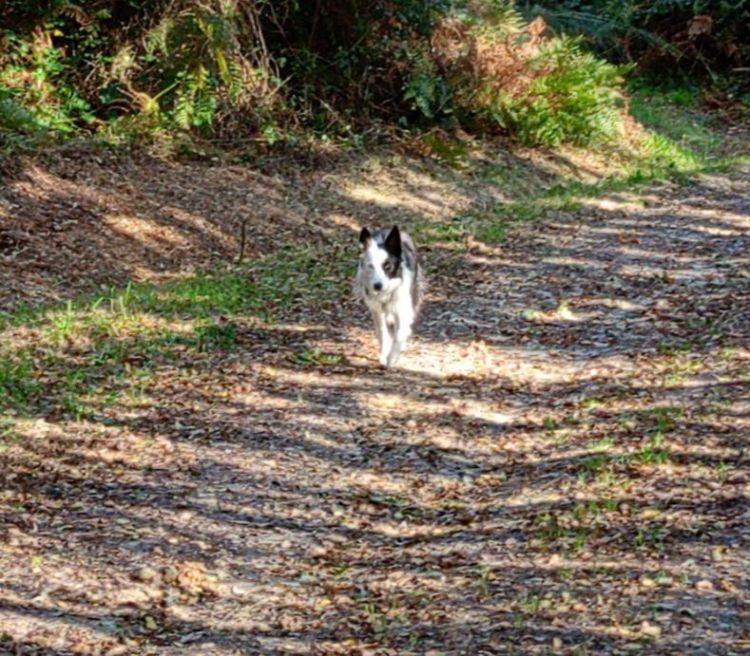
Welby had no interest in stopping and admiring the view. Each time we did so, he turned and looked at us in disgust.
Oplus_131072
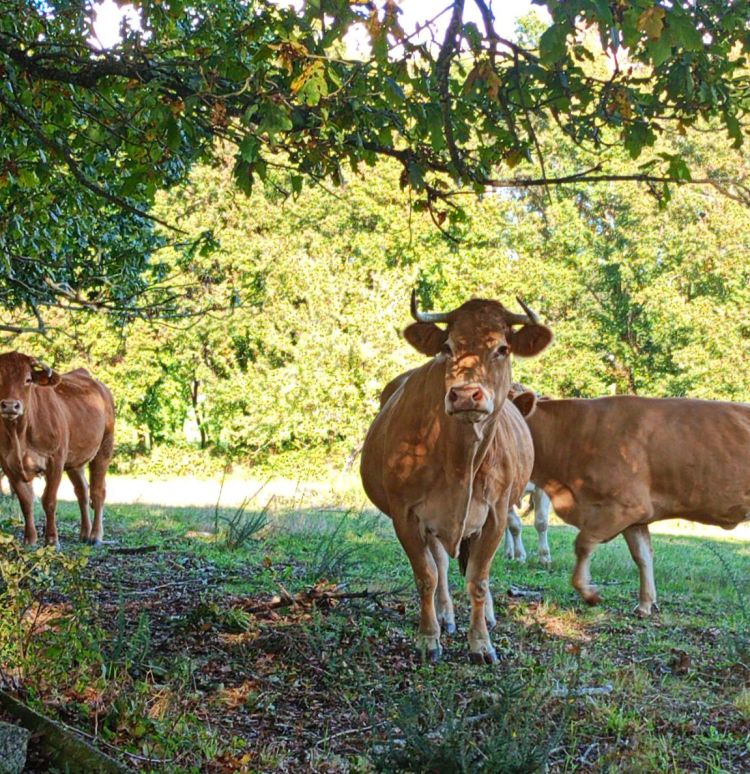
The path we followed ran through fields and woods, and because of the proximity of the farm were filled with curious occupants. They were not at all phased by the racket that Welby was making. (Don’t worry, he was on a lead at this point. We live in a farming village and are careful about other people’s livestock.)
Oplus_0Oplus_131072
Special offers. November will be a month of special offers on my books. All of the will be discounted each at a different time, so if there are any that you haven’t read, keep your eyes open for the discounted days.
Keep in touch with me in two ways: by subscribing to my readers’ group and receiving a newsletter, or by subscribing to my blog and receiving an email each time a new blog is published. However, there is more news to come on this, and all will be revealed in the new year.
Did you know that the second largest market for books written in English Is India? I didn’t, but when a friend recommended I submit a short story for an Anthology being put together by an Indian publisher, I decided to do so, more out of curiosity than anything else. Little did I know what a joyful time was in store for me.
The request came when I was at an all time low, in my writing journey.
No matter what I did, I couldn’t seem to get the stories in my head onto the page in a way that I was happy with. The writing was clunky. Whatever I did, mistakes crept into the finished book. I put them on Amazon, then took them down a few weeks later, not happy to sell books I didn’t like. I was on the verge of giving up altogether. I can hear you screaming “probably nothing that a good editor couldn’t fix.” I knew an editor would clean the books up for me, but my problem was deeper, and I would be wasting money if the books were re-edited before I was happy with the content. So I was about to remove my books from sale and stop writing. Steve had retired, so I planned to do the same.
So I sent off the story with an apology, explaining that a friend had read the story and thought it would fit their criteria, but I was sure that it wasn’t good enough. The reply came quickly with such praise and such kind words that I was overwhelmed. A feeling that was repeated when I read the finished stories. They are deep, delightful and so poetic. I am so proud to be a small part of a treasure trove.
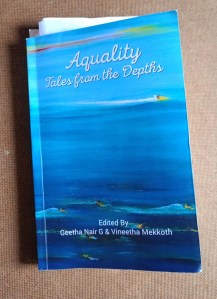
Aquality: Tales from the depths
A quote from the Forward
‘This book is a collection of of stories built around water. Some of these stories have water sprinkled on them, but most are borne by the water…of oceans, seas, rivers, streams, rills — sometimes majestically calm, sometimes tumultuous, sometimes dark and ominous, sometimes gentle and happily gurgling.“
There are stories by writers from all over the world, but its heart beats in India, with its richness and variety. One or two of the authors are male, but the book speaks to the souls of women, their experiences and their resilience.
This is not a frivolous collection. The stories echo the things we feel deeply about but often dare not express. It will make you laugh and cry, and the stories will affect you so much that you will dream about them. I am reading here excerpts from two, Hema Iyer Ramani wrote the first. She is one of the many friends I have made as a result of being a part of this venture. The second is my story. I wish I could read with the beautiful poetic lilt of the Indian ladies, but sadly I can’t and for that I apologise.
She By Hema Iyer Ramani
La Percebeira By Abigail Thorne
Being a part of the group of authors responsible for this book has been fun. I’m sure that the publisher is concerned about costs and the book being profitable, but the sisterhood of authors has been enthusiastic, noncompetitive, and un-materialistic. Their generosity of spirit shines through the stories, making the book quite magical. There are so many more stories that filled me with delight that I cannot mention them all so please just read the book.
As for my writing, I read more books on craft, more books on editing and had another go. I’m happy with the result, not because the books are as good as I want them to be, but because they sound like my stories. My next book will be better, more authentic. For me that is the trick, don’t concentrate on the writing trends that make the book commercial, instead focus on the story as I would like to tell it. It’s a bit old-fashioned, the genre might not be on point, modern rules of grammar are bent, but the voice is becoming mine at last.
In the meantime, read Aquality. If you live in India, contact your local bookshop or library and ask for a copy. Also, it’s available on Amazon India.
At the moment, the book is only available in India, but contact me if you live elsewhere. I will pass your interest to the publisher.
In the meantime, read one of my books. Available on amazon worldwide I like them so I hope you will as well.
It’s been months since I wrote a blog, so long that I forgot my own rules for a readable post and had to start a new project for 2024 Blogs Like other writers, I sometimes doubt my ability and reasons for continuing to write. But I’m back now.
Another and more cheerful reason is the recent addition to our household. His name is Welby, and as you can tell, he is a border collie. Like all new puppies, he takes up a huge amount of time. Anyone who’s owned a border collie knows they have endless energy. For a few weeks, he has exhausted us (in a delightful way), but now he’s growing up and things are getting easier. Steve retired at Christmas, which is another momentous thing, but it has inevitably changed the pace of our lives and the time I have to write. Again, not a complaint but an adjustment, and it made me question why I write, I thought of stopping, but I find I can’t, the ache inside me to get words on paper is too great, and I discovered it so late in my life that I don’t want to lose it now. While this was going on, I updated the Camino Murders series and published the paperback of sea dead. The story in my head matches the one on the page after reading countless books on writing. Once I commence my next novel, I’ll be more prepared, so keep an eye out for news about the upcoming addition..
Here, I summarise the three major stories in the Camino Murders series, in case you’re unfamiliar with them.
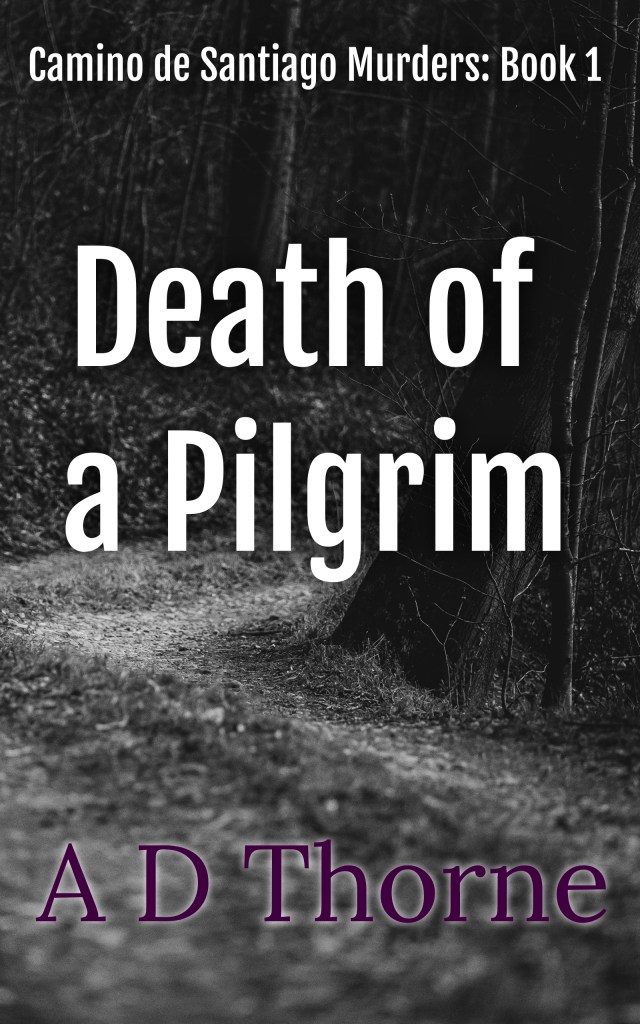
Book one, Death of a Pilgrim,
Richard Harris used to be a London detective. One day, while visiting a museum with his wife, he saw some men acting strangely. This incident made him a hero, but unfortunately, he lost his wife and the ability to walk properly. Distraught and grieving, he decided to quit his job and buy a small house on the Camino de Santiago, a place that held special memories for him. In order to forget the bombing incident and his previous life, he found solace in art. However, when he returned from a walk one day, his peaceful existence shattered as he discovered the body of a young girl hanging on his fence. The shocking event disrupted his world once more. It was only when he realised he needed to confront his past and find a resolution that he teamed up with Colonel Miguel Lopez of the Spanish Guardia Civil, his new friend. Together, they embarked on a mission to uncover the identity of the murderer.
Book two Mass Murder.
Colonel Miguel Lopez has invited Richard back to the Special unit to investigate who is killing priests along the Santiago de Compostella and why. He quickly discovers that all the priests have a secret, a secret that Miguel suspects but won’t talk about. His search for the killer quickly becomes a battle for justice. Even Miguel doubts if the courts are the best way to deal with evil. So who is right? The killer, or Richard, has to decide what true justice means.
Book 3 Sea Dead,
Richard is ready to take his romance with Julia to the next stage, so he invites her over for a holiday. They are having a lovely time until Julia finds a body on the beach. The local police deceive them, advised by a hotel server to leave, and encounter suspicious individuals who tell them about the rising number of deaths at sea and connect them to an ancient local myth. When Richard investigates, he attracts interest from the assistant minister for justice. Will he be able to uncover the truth when legends and lies come together to form a web of deceit?
Each of the books deals with a different motive for murder, and Miguel and Richard form a friendship which helps them to make the world a safe place.
So now, like the new leaves on the trees, I am emerging ready for the summer. So Look forward to more stories from a writer in the wild, new projects, and more stories. In the meantime, read the Camino series. I’m sure that you will enjoy them.
“That’s your bed made. What else shall I do? Remember, this is my last visit,” called the carer, her cheerful sing-song voice echoing around the empty hall. “I know, I haven’t forgotten, so there is a gift on the kitchen table.” Emily had heard such negative stories about carers, but Amy was delightful. The granddaughter she had wished for, so unlike the one she was moving to be with. “Thank you, but you are my favourite client, and I get paid to be here.” Amy skipped into the room, holding the gift-wrapped box from the kitchen table. “You have been a wonderful help. Now, bring those last bags and put them on the porch for the Cats Protection League to collect, will you?” “Of course. Are you going to miss this house? Your new flat will be so different.” “No, I have my memories in here.” Emily pointed at her heart.
She lied, of course. This had been her home for so long, as familiar as the bed she slept in. Amy bumped and clattered the bags on the stairs. Young people were so full of life, and she had missed the noise when she gave up teaching, much preferring it to the lonely solitude that her daughter insisted she needed now. “The annex is at the bottom of the garden, Mum, no one will ever disturb you there. She had told her. “Do you want to keep this? It fell out of an old handbag.” Then a photograph fluttered to the floor and Amy picked it up. “Oh, it’s a letter, and this picture. Is it you and Mr Burton? How lovely. You look so happy.” Emily’s eyes misted over as she looked at the photo. ” No, it’s me and someone I met a long time ago. My husband didn’t waste stamps writing to me.” “Oh, is it a tragic tale of a lost love? How romantic?”
“Nothing so dramatic. In fact, it should never have happened.” But the memory made her smile. “Ah, a secret lover,” said Amy with a sigh. “If I make us both a cup of tea and bring the shortbread that Mrs Garret gave you. Would you like to tell me the story?” “You, young lady, should have left five minutes ago, and Mrs Garret’s shortbread is a health risk.” When she saw Amy’s disappointment, she softened her voice. “What about your next client?” Amy’s face brightened “As you are my last this morning, shall I put the kettle on?” Emily nodded. She had vowed at the time that this story must go untold to the grave, but that was a long time ago. “I love your stories, Mrs Burton. Mum tells me how precious memories are, especially as you grow older.” “The things in your heart never age.”
That wasn’t true. Memories twisted and shifted with time. Those diminished by regret grew smaller and sharper, and others smoothed out, their blemishes’ fading and edges blurring in a halo of joy. “Now, let’s start with the photo. Who’s the hot guy?” “Mark Winters was his name, and he was the county archaeologist for Durham.” Emily’s voice had become wistful. She was recalling his face animated with enthusiasm, a single lock of dark hair hanging over his eyes. “Was — Is he still alive?” “I don’t know, I never saw him after that weekend,” she said, her mind in another place fifty years earlier. Amy settled in the armchair. “Now, I want the lowdown, and the details, so start from the beginning,” said Amy, with a cheeky glance over her teacup. And Emily remembered the weekend as though it was yesterday.
“In those days, I was a stay-at-home parent, with toddlers to look after. John worked away for weeks at a time, so I was bored. I was never much of a housekeeper. One day, I took the children to the museum for an outing and met a friend from my university. We got chatting, and he told me about a local amateur archaeology society, and suggested I join because there were local young mums who belonged. They had a rota for babysitting while the rest visited a dig or attended a lecture. It was exactly what I needed, and I loved it.” “And that’s where you met, Mark.” “Now don’t interrupt if you want to hear the complete story.” Amy mouthed, “I’m sorry” and settled again. “There was a competition to win a place at the National Conference for Archaeology, expenses paid, and I won. John didn’t want me to go, because they held it in Durham, and I would have to stay in a hotel. He couldn’t understand why I was interested, but I was adamant and persuaded my mother to look after the boys.” “The symposium began with a lecture by Mark on the future of archaeology. It fascinated me and I queued at the end to ask questions. I had so many questions. I dreamed that once the children went to school, I could study in the daytime, and volunteer at the local museum. He answered my queries, and my questions about local digs and we talked for so long, the conversation continued in the bar. The archaeology crowd drank real ale, so I did too. Only I wasn’t used to anything that strong and it robbed me of my common sense.”
“Then you fell in love. What about your husband?” “Well, I’m not proud of that part. It happened because I spent my days at home in old clothes cleaning up after the children. John was so tired when he came home that he didn’t want to talk. Mark treated me as if I were the most sophisticated woman in the world, and it flattered me that he was interested in what I said, as though it was worth something.” she could hear his voice with that odd little gasp he took when he had talked so fast, he hadn’t taken a breath. “Aha, the photo doesn’t do him justice. He had a brown, weathered face with crisscrossing lines, and I loved his eyes, which were brown and warm, and the corners crinkled when he smiled. Honestly, he was so handsome that I wanted to spend the night looking at him. Later, we walked back to the hotel through the park, and stopped by the lake, and counted the stars that were reflected in the water.” She paused. He had stopped talking about archeology and looked at her quizzically, as though he didn’t understand what was happening. He had touched her hair and then her cheek and even when he had moved his hand; it left an imprint on her face. They didn’t speak. Words would have broken the magic. “The next morning, he asked if I wanted to visit a dig site, and of course I did. The archaeologists were at the conference, which meant we were alone on the moors. It was a lovely day, and he showed me their finds and explained why they were digging there.
It fascinated me, it was so different to my normal life, and he answered my questions as though I was a colleague. He explained how to tell where man has influenced the landscape as we walked. He had taken a picnic, and we ate it, sitting in the heather by a stream. My heart did flip-flops as we held hands and gazed at the distant city.” She could smell the heather. The fragrance isn’t strong, but ever since that day, it reminded her of him. She had wrapped a sprig in her handkerchief and when she got home, kept it in a pot on her dressing table. She wondered what had happened to it and remembered her daughter had thrown it away on one of her periodic ‘helpful’ spring cleans. Amy was watching her intently now, so she went back to the story. “There was music after dinner that night and he laughed at my jokes as we talked. I wore a silk blouse that I had made myself and used the matching scarf as a hair band which he untied, to admire my hair, and I felt so free and so confident. Then we danced until dawn, and I had never done that before. A colleague took that photo that evening and caught the chemistry between us.”
“What happened then?” “We were living in a bubble as if our real lives didn’t exist. The next day, when the morning lectures ended, we returned to the lake in the park and hired a boat to row round the small island in the centre. But we were both hopeless at rowing and we got soaked when the boat tipped over. But we laughed and then lay on the island to dry. The ripples danced and sparkled in the sunshine as though we were in the land of fairies and as we watched the reflections on the water, time didn’t matter anymore.” She closed her eyes to picture that scene, and the details were so clear. These days she forgot appointments and where she had put the cheese and her glasses, but she remembered that day so clearly. The pebbles that got caught in her shoes, the dry grass, and the warm earth under her shoulders, the way her hand felt in his. “Then later, clouds shaded out the sun, and it was raining when I arrived back at the hotel. Real life had intruded into my daydream. I had to pack and ring John to tell him when I was due at the station the following day so he could collect me.” “So you and Mark never talked about the future?” “No, we never did. He had to sit with colleagues at the Gala dinner. The next morning, he drove me to that train, but we were late, and I had to run.” “But you didn’t leave, Mr Burton, did you? So, were you trapped in a loveless marriage?” She smiled and her young companion. “In modern films, love is so black and white, isn’t it? No, you see, John was a good man. Perhaps he never had Mark’s passion, or shared my love of history, but we had a wonderful marriage.”
“What about the letter and photo?” “Mark wrote two weeks later, asking to see me again and saying he couldn’t get me out of his mind.” “No, he didn’t? And then you turned him away? Didn’t you ever regret doing that?” “By then I discovered I was expecting Helen, so I said no. As for regrets, I wondered what life might have been like with him, but there were no genuine regrets. I loved John and I miss him still.” “Did you carry on with the archaeology?” “No, I was still interested, but it felt wrong, so when Helen was old enough, I trained as a history teacher and did that till I retired.” “But you kept the letter and the photo, so it must have meant something to you.” She had regrets, of course she did; she had done the right thing and had no doubts, but once you have seen what love and passion can be like, you can’t forget it. From time to time, she had wished that John looked at her with the intensity that Mark did that weekend. With a sigh, she continued. “I gave Mark a piece of my heart, and the memory of the way he made me feel is precious even now.” “Maybe you’ll get another chance at romance once you have moved into your granny flat.” “In two weeks’, time, I’ll be eighty. I’ll never be young again!” “Not in years, no, but rumour has it you broke your hip, falling off your grandson’s electric scooter? That’s not what old folk do. If I were you, I’d join the local archaeological society. After all, you never know.”
The end.
If you enjoyed this story, why not buy one of my books.
I’m still close to home, although I plan to get much braver and travel further in the future. I’m lucky in that there are so many beautiful spots to settle within a five-minute walk of my house. I’m being more stealthy than last time, as I’m sitting in a neighbour’s field. I have set myself up so that I have a lovely view, but no one can see me from the road, because of the long grass. As I settle down, it’s drizzling with rain and hoping that’s because we are in the clouds. I didn’t bring waterproofs. The views are hazy, shrouded in mist, and the distant mountains come and go taunting me. One day I will find them, but today I’m content watching them change, and form a distant end to my world. Closer to me, the hay meadows are ready for cutting and contrast sharply with the green of the forest. The tall dry grass rustles and whispers as the breeze comes through. I hear a cricket call and his friend reply. This afternoon the air will be full of their chatter. But now i shiver in the damp air. Note to self: Add something waterproof to a permanent kit bag when I have one. It’s going to take me weeks to gather everything I need. The upside of the cooler air is the amount of birdsong. I love being serenaded. There is a wood pigeon somewhere behind me heralding in the day. Steve helped me to set up again today, so once again I have a small table. I better not get used to these luxuries.
It is now the middle of the afternoon and it’s so hot that I’ve rigged up a sunshade. An umbrella is the way to go.
I’m still working on the silver chalice. When I finish and republish, I will change the name to Death of the Rector. I have a character thread to change and update, and I want to change the concluding chapter to give a more satisfying ending. Once those two things are done, I will spell check and transfer the new draft to my e-reader to see how I’m doing. I’m worried about the characters because when I plotted the original story, I knew nothing about character arcs, flaws, needs, and desires or any on the things which are so fundamental now.
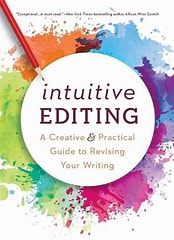
I am also drafting the book review of Intuitive editing, which I hope to have published before you read this. Update Review is here.
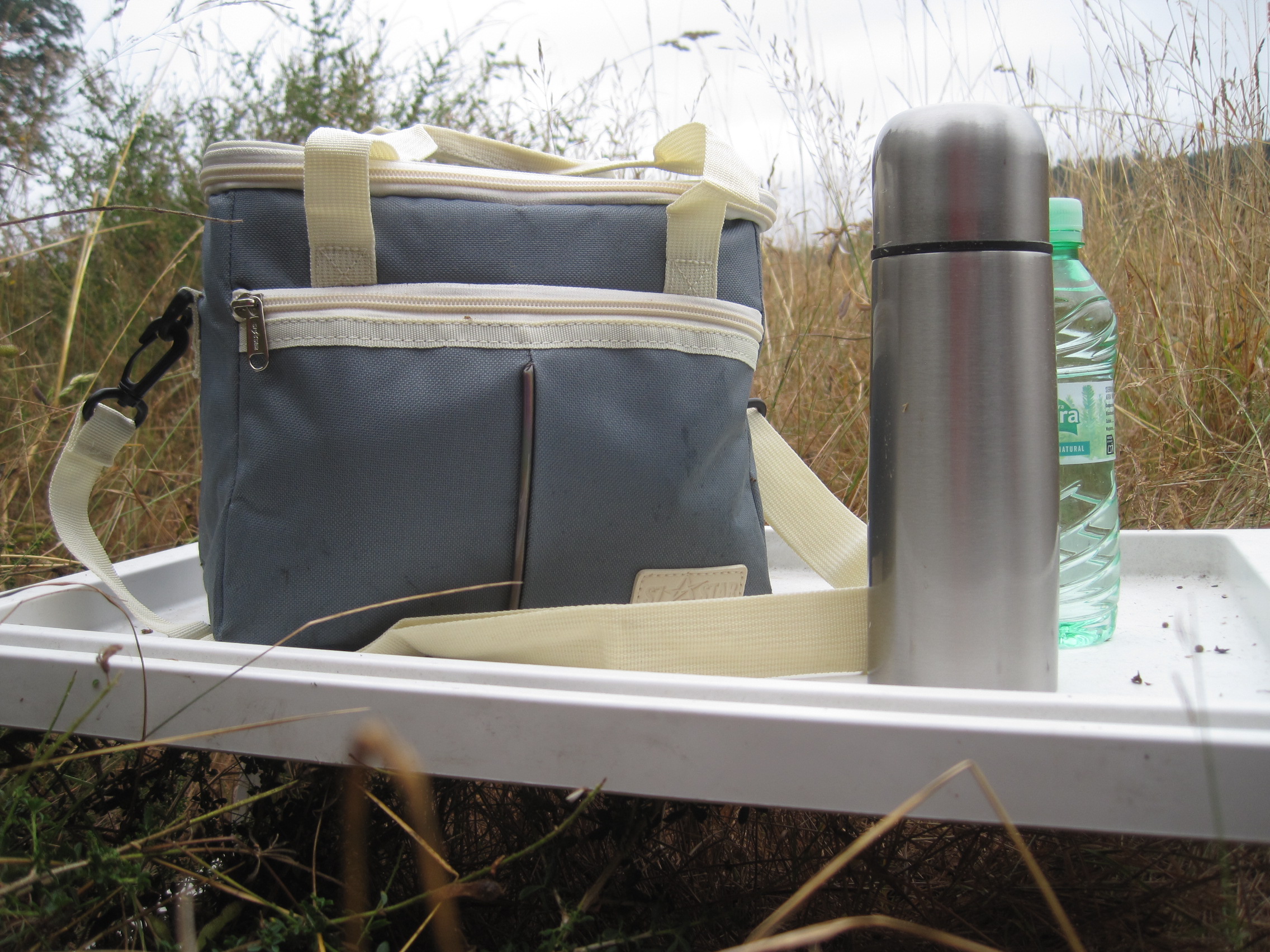
I have purchased my first new pieces of gear. A new flask and a sensible sized lunch box. The flask is a real treat because it means I get coffee with my ham sandwich for breakfast. Lunch will be couscous, a tomato salad, and cottage cheese, and randomly, a chicken wing which was left over from our BBQ at the weekend. So, I’m a fancy pants today. I’ve even got pudding, a bag of plums from the garden.
The last two chapters of Tea and comfort. I know it’s taken me ages, and it’s not because the book is bad, it’s because I keep running out of time and reading fiction isn’t high enough on the priority list. I need a solution, a solution for that. The craft book that I am reading is Show and not tell and really getting it by Janice Hardy. There is the third book that I have read on the subject. Previously I read the book and when I finish, I’m sure I understand the concept. Then when I come to draft my next story, I realise I haven’t understood it. I will persevere and one day I will understand. The best authors are in it for the long term. We just keep writing. Even if the book is brilliant, I realise that the silver chalice won’t get the benefit. I hope my next book will. I’ll let you know.
Reflection.
Photo by Miguel u00c1. Padriu00f1u00e1n on Pexels.com
A constructive day today. It turned out that I needed both shade and shelter, and an umbrella will solve that problem for next time. Having a stunning view helps my brain think more creatively. I don’t know why that is, but it felt as though I was drinking in and feeding my imagination simultaneously. My back hurt after sitting in the tiny camp chair all day, so I need to fix that for the future. Once again, a day outdoors in nature was a wonderful experience and restored something in me. Roll on the next.
A creative and practical guide to revising your writing.
Tiffany Yates Martin.
Tell me fellow Authors. Where does the magic happen for you? Is in the writing or in the revising? Does it matter?
I am a drafter. For me, it’s writing that initial first draft that is magical. Once the story is on paper, I’m finished emotionally. Everything that comes after that is sheer torture. But I have met authors for whom the first draft is like shovelling sand at the start of a sandcastle competition, and the real magic is in the editing. Carving something wonderful out of that ungainly heap of nothingness. I have struggled to find an editing system that makes sense to me. That keeps me organised without attacking the heart of my story. My head spins with oxford comma’s show don’t tell, character arcs, and weasel words.
Intuitive editing addresses those issues without me feeling I must sacrifice my story to edit it. For those of you who love editing, Tiffany Yates Martin fills the pages with details and suggestions to make your manuscript shine from the basic structure to the outside polish.
The first section explains how to approach your revision and think like an editor and the last section covers working with a professional from finding someone to talking to them about your work. The meat of the book offers a process. Macro edits- micro edits and line editing. She explains the reason for each section, and here is my favourite bit. Each section has an how to find it and how to fix it. I like the way it’s non-patronising and practical in its approach. First, she concentrates on character, stakes, and plot. And only when they are vividly shown on the page, so we move on to finer things. Suspense and tension, show and tell, structure momentum, pace, and voice, then at last deals with the line edit. The very thing that most people are aching to do from the beginning. Each time I write something, I struggle with some detail of editing. Each time I edit, I learn something new. I find it demoralising. I draft my book and I am the best writer ever. I edit and I am the worst, and for a while it cripples me.
This happens every single time, but now at least I am seeing progress. Her advice is generous and encouraging, which helps me, who is permanently and irreversibly insecure. I have read books on editing that look down on the writer, making you feel as though you will never be good enough to achieve what they are suggesting. The professional is the person who matters. This is not like that this is about forming a partnership, and understanding the process so that you can be a better writer.
Remember, the more editing you do yourself before you send your work to a professional, the less you will need to pay them to do. The more chance they have of concentrating on the finer details.
So, have I put this wonderful advice into my own writing? No, of course not. But I now have somewhere to start, and something to use as a reference point. Book by book I hope to get better and while I have hope, I keep writing.
The book is now on my top ten reference books on craft.




























 Abigail Thorne