Scones

I recently watched a TV cooking competition on YouTube. The judges asked the contestants to cook something which was a family tradition and reminded them of home.
One girl made scones. She told the judges that every day after school she went to her gran’s house, and her granny made the best scones. Her face lit up at the memory. Some days there would be a cheese scone with a bowl of homemade soup, sometimes a plain one with butter and a glass of milk, but her favourites were sweet and contained glace cherries. My mind was instantly cast back to my childhood, and memories of watching mum make scones.

My mother’s scones were famous. Sometimes long after I had left home, I would meet a stranger in Bridlington where she lived, who would stop and say “You must be Dorothy’s daughter,” and after a few pleasantries I would be told ‘she makes the most marvellous scones.’ Even now, many years after she died, a conversation about Mum includes the same reference.

I remember sitting at the table watching her hands rise and fall as she rubbed the fat into the flour and just like the contestant; they came both savoury and sweet and were a frequent after-school snack.

People who know the family assume she taught me how to make them, but she never did. In fact, she never taught me how to make anything. Right until she died, she assumed I couldn’t cook. In spite of that, my love of cooking and good food came from watching her.

The rise and fall of her hands in the rhythmic, almost hypnotic, way she rubbed in the fat, allowed the flour to fall back into the bowl in puffs and clouds gathering air as it went. I know now that’s why her scones were so light. She used different fats, butter or margarine, maybe lard or a mixture. Depending on whether they were sweet or savoury or may depending on what was available. The fat and the milk came straight from the fridge. They needed to be cold. There was always salt, and sugar, pinches and spoonfuls no weighing. No eggs, not even for the top. She brushed them with milk.

I believe she had made them so often that instinct played a bigger part than memory. The feel of flour told her if the fat was right. She eyeballed the liquid as she cut it into the dough with a knife, never hesitating or even looking too closely.
Once or twice, friends of hers have asked for her recipe, but even though I have her hand written recipe notebook, there is no mention of scones.

The scones that the cooking show contestant made from her granny’s recipe did not impress the judges. They were not rich enough, more like American biscuits. She served them with butter, not cream. They were too big and not refined, so they wouldn’t look good on a cake stand. They should have raisins, not glace cherries and more sugar.

One judge, finished with the comment, “Of course they taste fantastic but they are not traditional scones, so they don’t fit the brief. What makes a good TikTok story is not good enough here.” He then stuffed the remaining half scone into his mouth.

I watched the confusion on the girl’s face and was angry on her behalf. In the north of England, when me and this girl’s granny grew up, we didn’t have cream teas. TikTok hadn’t been invented and few of us had the money for afternoon tea in a posh hotel. (A tradition that originated in southern aristocratic houses.) Scones were a filling carbohydrate that were quick to make and filled hungry bellies.

Curious, I looked up the history. The modern recipes probably started in Scotland as a filling quick bread, the word scone originating from the word for lump or mass. Variations were made in Ireland and the north of England, all cooked on the fire or a griddle. With the invention of baking powder, quick breads and scones really took off and spread down the country, where no doubt they got fancier. The thing that struck me from this research is that the “traditional scone” doesn’t exist in one form because cooking simple flour doughs has happened since fire and grinding stones existed.

Fer goodness’ sake we can’t even agree on the pronunciation, let alone the recipe.


For reference Pru Leith’s technique bible suggests an egg wash but no egg in the dough and is sparse on the sugar, the Be-Ro recipe book (first published in 1923), from which many modern recipes originate, used an egg in the dough and on top and more sugar.
Mrs Beeton includes recipes for both dropped scones and baked scones, and suggests using sour milk and Modern practical cookery published around 1940, devotes twenty pages to scone recipes which include a variety of add-ins including candied cherries and mixed peel but are even meaner with sugar and fat than I remember and suggest a mix of milk and water to bring the dough together.


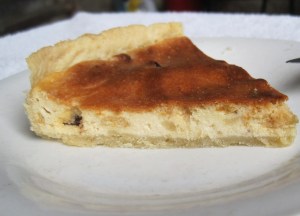
My recipe for cheesy scones, as shown in the pictures, is:

225 gm self-raising flour (I make my own)

30 gm butter

60gm grated hard cheese. (I like cheddar)

A hand full of snipped chives.

A pinch of salt and a teaspoon of sugar. (You don’t taste the sugar, but it gives a better crust and balances the flavour.)

Heat the oven to 200 C -190 if you have a fan oven

Rub the cheese and fat into the flour until you get a rubble like mixture. The butter disappears, but there will still be flecks of cheese.

Add the salt and sugar and chives.

Add the milk a spoonful at a time, mixing it in with a knife. When you have a clumpy mess, press together with your hands. It should come together in a ragged ball.

Remove from the bowl and shape into a ball on a floured work surface.

Flatten with your fingers until you have a round, flat disc and cut with a biscuit cutter. Re shaping the left over dough each time until you have seven or eight rounds. Put them on a baking tray and brush the tops with milk.

Remove from the oven when they are puffed and golden on top about 10 minutes.

Cool and sprinkle with chilli power.

They are not famous and I doubt people will talk about them after I am gone, but they do remind me of mum and some of the good parts of my childhood and straight from the oven with a bowl of homemade soup. They really can’t be beaten.

If you have enjoyed this post, why not read one of my books.

See Book page

The mystery of the metallic manure.

When we moved to the Galicia fourteen years ago, we had never lived in the countryside before. We couldn’t speak either the local Galician language used by our neighbours or Castilian Spanish. Over the years, there have been many misunderstandings because of both language and lack of rural experience. I can’t hope to explain how different rural Galian life is to life in a busy Midlands city in the UK.
We didn’t expect that fourteen years after we moved here, many unfathomable things would still happen. One such incident occurred a few weeks ago.

Steve takes the dog for a walk long before I am even out of bed. He is one of those cheerful morning people that I have such difficulty coping with. Because of that, he brings me a drink after he has walked the dog and leaves me alone until I wake up properly. On this occasion, he looked worried when he came in with the coffee.

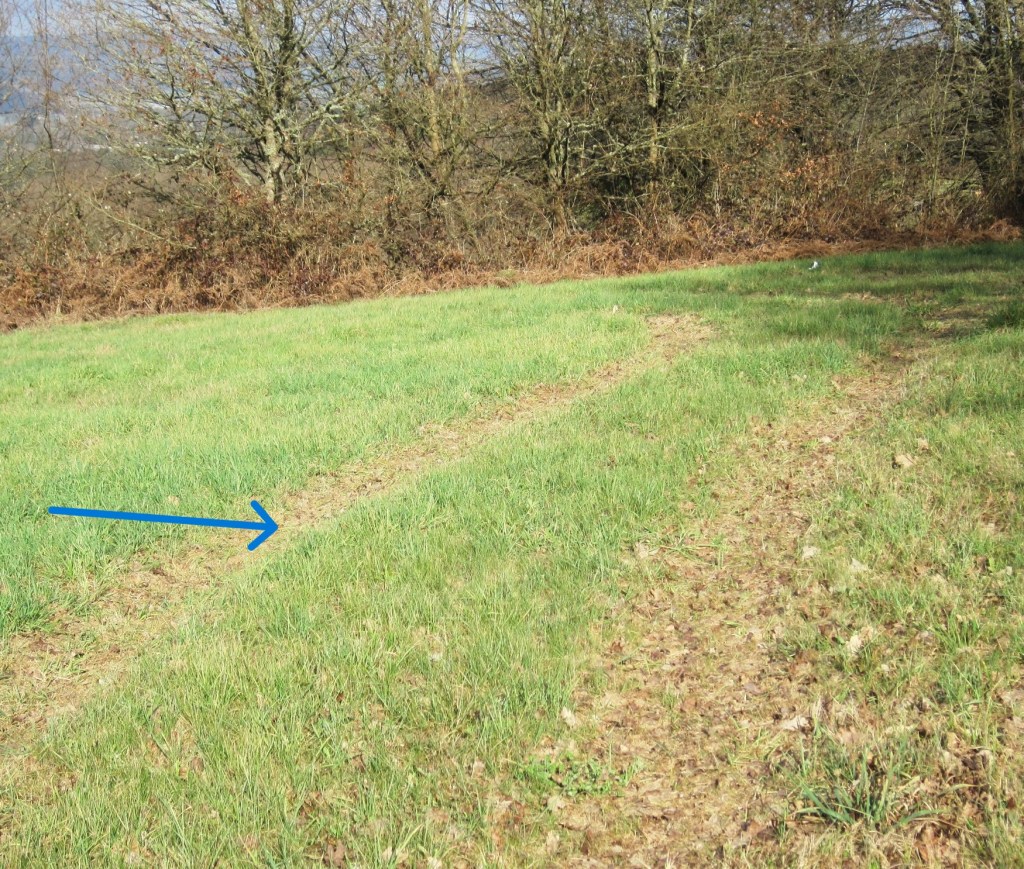
“It’s frosty outside and there are big tire tracks all over our land. You heard nothing last night or this morning, did you?”
I shook my head; He was late, and I was working when he returned home the previous evening. I wasn’t awake when he got up that day.
“It looks like a tractor and smells as though they were muck spreading.” He added helpfully.

“What about the people who cut our hay? Perhaps they hope to get a better crop this year.” I was thinking on my feet, (actually my backside as I was sitting in bed drinking my coffee).
“Seems strange that they didn’t tell us,” he said, but accepted my explanation.

It went out of my mind for a few days.
Later that week on a lovely sunny day and my neighbour knocked on the door and asked if I wanted to walk up the lane with her since in the sunshine. I gladly agreed, closing my computer with a sigh of relief. Writing is much less fun in lovely weather.
We ambled along, stopping to point out the early spring flowers.
“Who has been spraying your field?” she asked.

“I’m not sure. We wondered if it was those people with sheep who cut the hay last year.”
“No, it’s not them. They drive an ancient tractor held together by string and good luck. No, those tracks are from one of those new giant ones. You need to be rich to afford one.”
I shook my head. “I don’t know then, because if it’s a gigantic machine, that also rules out the team who were working for Paca’s family. “There had been a problem the previous summer with the family of a deceased neighbour who go the boundaries mixed up.
By now Chus was marching across the field to examine the clues, or in this case, tire tracks. We both flopped down beside the large ruts, and I was concerned when I saw how deep the ruts were. They had really churned up the ground and would make it harder to cut the grass in the summer.

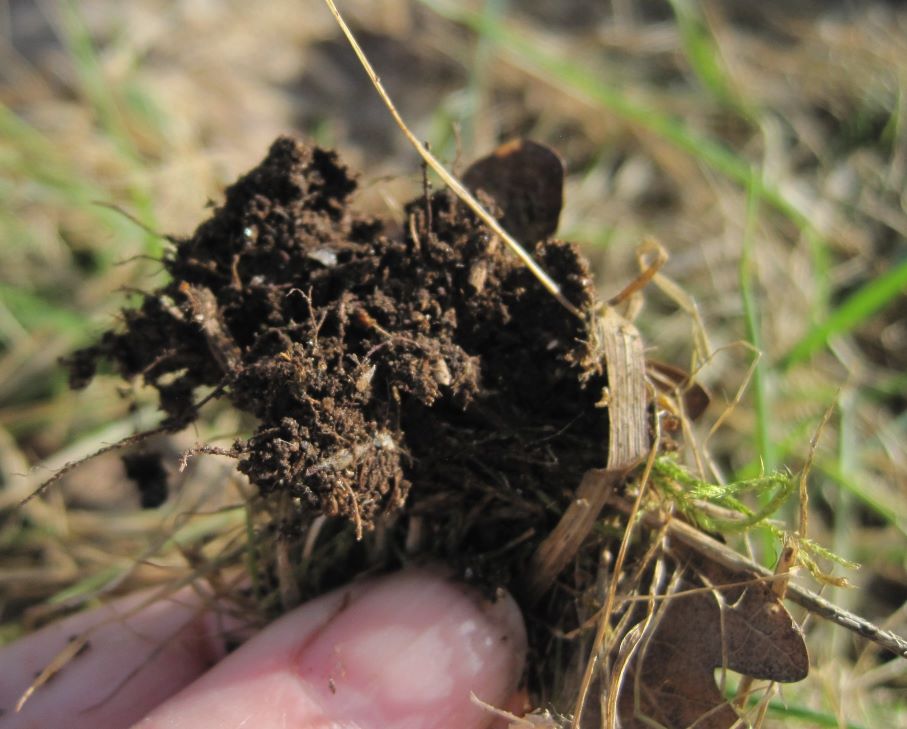
She handed me a handful of the muck that they had spread. “Smell that!”
“It smells like manure,” I ventured, not really knowing why I was sitting in the middle if a field smelling dirt.
Can’t you smell that metallic odour? It’s not natural.”

I shook my head, pulling a face, still clueless, and I had also seen Manuel, another neighbour, crawling up the lane in his car, gawping at us. Obviously, his neighbours had gone ‘loco’.
Chus was using her ‘I’ll explain slowly because you are English voice’ ” You know what a cow eats from the muck” she explained “When cows eat grass and good hay, it’s sweet, a bit like warm beer. This comes from a cow factory. It is full of chemicals and who knows what else.” I still couldn’t tell the difference, but we had discussed industrial factory farming before, so I guessed where this discussion was heading. She had kept a small herd of grass-fed beef cattle before an eye problem had forced her into early retirement. Her husband is a one of the best butchers in the district. They have ‘views’ on industrial farming and the quality of meat and dairy products that result from it.
Now I had one neighbour thinking I had lost my marbles and another despairing at my lack of crucial countryside knowledge.
“They came in the middle of the night, illegally dumping their muck that’s what has happened, what are you going to do about it?”
I shrugged “I don’t know,” I answered weakly “Maybe it will improve the quality of our grass.” The look she gave me then would have wilted a geranium.
“We’ll just have to keep watch, or make signs to say ‘Private property, no manure in the village’.”
And we that proclamation she got up and marched back down the lane with me trailing in her wake.

I had no intention of making signs or keeping watch. Even if there was a sign, it wouldn’t stop a farmer from coming in the night to dump his slurry. In the daytime, Chus and I are often the only people in the village. She is 5 foot 1 and weighs seven stone and I walk with a stick. Neither of us stand a chance against a large tractor and a man doing something illegal. (Intensive farms are required to have slurry tanks and have the waste disposed of professionally).
I have an overwhelming feeling of failure. It feels like we have made no progress since we got here. I don’t know what really happened or how I can go about fixing it. Unfortunately, I still don’t have the language to deal with an angry dispute in Gallego despite my efforts to learn Spanish and worst of all, I still can’t tell the difference between good and bad manure.

If you have enjoyed this post, why not read one of my books

See Book page

Publication, Prayer and Pilgrims.

Patio

The week after I publish a book is always strange and often, I mooch about the house, not quite knowing what to do with myself. In theory, I start the next book, but the time immediately before the publication date is so intense that I have to shake that off before I can think of anything else.

This time the only difference to that pattern is that I already have the draft of the next book written, so I will edit and revise, instead of starting something fresh. Today, that sounds even less appealing.
Added that, we are in the middle of holy week. Steve has days off and the weather is glorious.

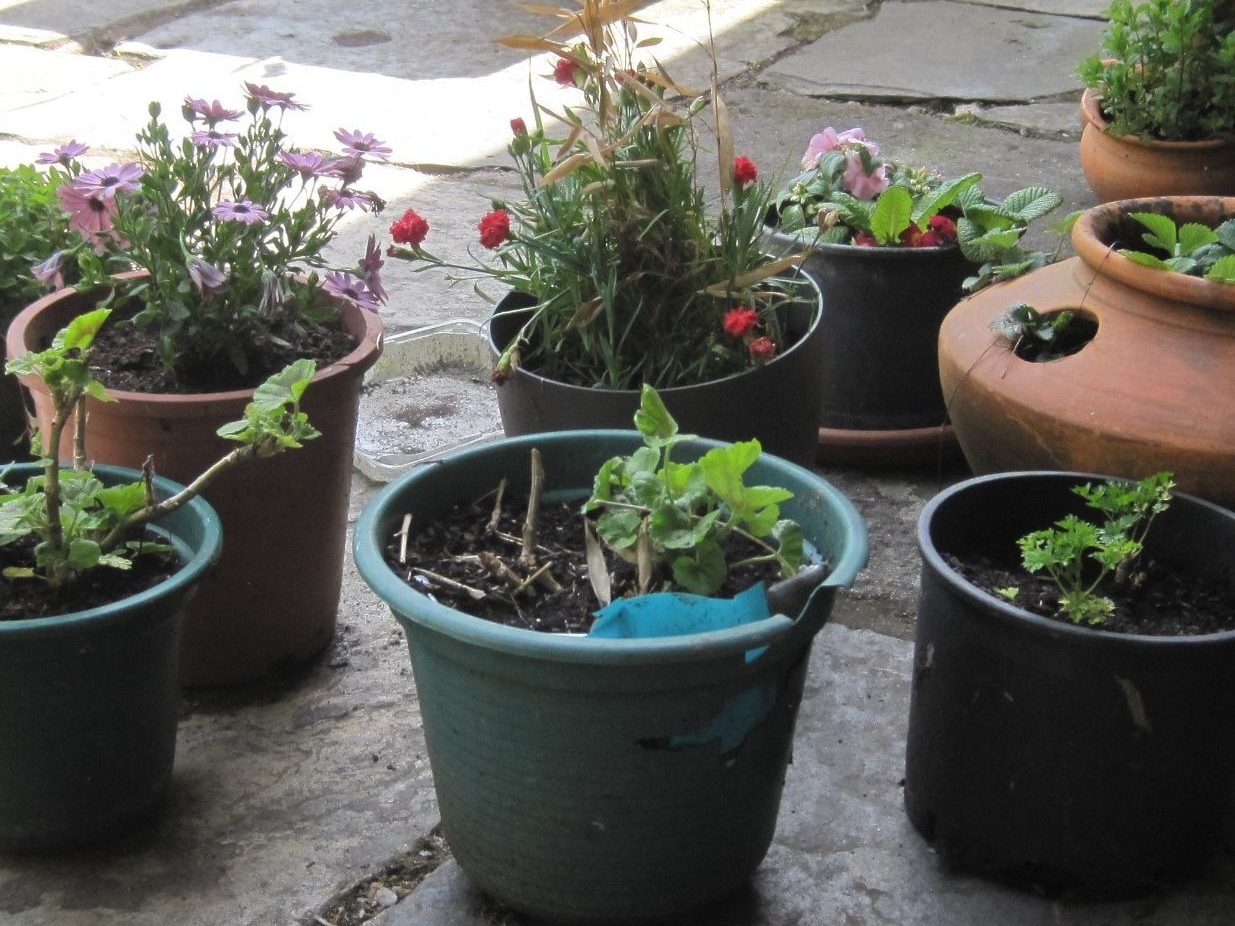
My mind strays toward the summer to come. We are planting spring flowers on the patio and on Sunday we are celebrating Easter day in Santiago with our friend Anna Noon, who is the Anglican/Episcopal Missioner for Pilgrims. I am hoping some of those Pilgrims will join us for the Eucharist in Santa Susanna’s and make the celebration memorable.

To prepare for that, I have been making prayer patches. (Look up Prayer shawl ministry, if you don’t know what they are) for people to carry in their pocket as a symbol that Christ is with them and to assist prayer. Especially useful on a pilgrimage.

As I work, I recall how difficult it has often been to find a time and quiet space to pray. As a child, my family and I often visited the village of Epworth, the birthplace of John and Charles Wesley, the founders of the Methodist church. I learned about Susanna Wesley, their mother. She had nineteen children, and the family was poor, so help with the household and children was beyond her means. One day, in desperation, she put her apron over her head and told the children that when they saw her like that; she was with God and they must not disturb her.

What she actually did in those prayer times I don’t know, but as a young mother, when having a ‘quiet time’ was nigh on impossible, I remembered her example. The apron thing wasn’t very practical, so I looked for a similar solution and for me, it was a small wooden cross which I carried in my hand whenever I pushed the pram. And no, I did not spend every moment when the cross was in my hand in intercession. Sometimes I needed to be quiet. Once or twice I needed a good cry. I’m sure that for Susanna it was the same. I know that because she was human.

I am sad to say that her life’s circumstances didn’t change a great deal. Nine of her children died in infancy, and her marriage was difficult. Simple things, like finding the next meal, continued to occupy her time. I like to think that her prayers brought her peace. We might never know that, but what I do know is that her prayers changed the lives of generations to come.
Two women called Janet Severi Bristow and Victoria Galo started the prayer shawl movement in 1998, intending to help women needing a moment of quiet and comfort in difficult times. I do not know if the story of Susanna Wesley influenced them, or even if they had heard of her, but the sentiment and the inspiration are the same.

The pocket prayer shawls I am making are for those men and women who need to carry their quiet place with them.


I crocheted mine and I love the way the repetitive rhythm means I can say a prayer for each stitch I make. I use the same principle if I intend to walk prayerfully, and so I can ask God to bless the pilgrim who might use it. Walking is a way to lose the things of this world for a while and allow God’s rhythm to take over.


I still have a butterfly mind that flits from one thing to the next with the least provocation, despite all my lofty principles, and I am forced to trust that God honours my intention as much as my actions. Sadly, I am as human now as I was all those years ago, although I have learned to accept my limitations more readily.

Either way, I have plenty of squares prepared to take along with me on Sunday.


We are expecting a record number of Pilgrims to pass through Sarria this year, and we hope to meet as many as we can and share stories with them.


I have written a plan for next week’s work, so that’s something at least I am working on the next book in my Camino de Santiago Murders. This one is called Sea Dead and centred on Finisterre, where Richard Harris has to discover the identity of a body washed ashore while he is on holiday. He is told that the body belongs to a careless pilgrim washed off the jetty wall in a storm, but he knows that the local police have lied to him and want to find out why.


So I’ve firmly fixed my mind upon this year’s Pilgrim season, in my mind and in my heart.
My god bless you this Easter weekend.

See Book page

A Womble in Winter

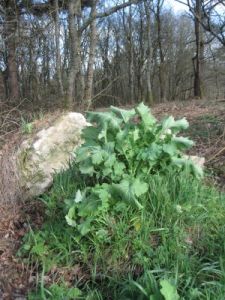
It is normal for me to supplement our diet with wild greens, even though we have a vegetable garden. Miners’ lettuce (Winter Purslane), Pennywort and chickweed all find their way into winter salads. This year, though, I stumbled on a real find by the lane which leads into the village. Turnips. We’ve been eating them for three months and the last few days of warm weather has finished them for good. I discussed their appearance with my neighbour, who concluded that they had seeded themselves from a neglected crop planted years ago in a nearby field.
“But why have they spread now I asked, who haven’t really seen them here before?”
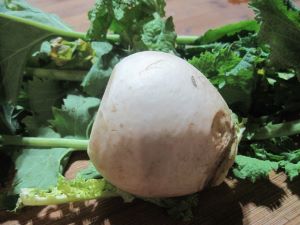
“That’s easy,” she told me. “It’s climate change, devastating that is, because they’ve changed look at the size of the turnip,” and she pulled one up to show me a huge white winter turnip.

“These are way better than the ones on my allotment. Let’s pick a bag from the top of the lane,” she said “If we leave the ones nearer the village to go to seed, we might get a field of giant turnips next year.” I suppose she’s right, but do should we encourage an invasion of giant turnips, but then that’s no reason not to eat them. Watch this space to see if they get their revenge next winter. (Think, ‘Day of the Triffids,’ but substitute turnips.)

My scavenging activities are not always welcome and I know that it’s not entirely normal. I remember once when my son and his wife came for a visit; they laid bets on how much junk (not how I described it) I would bring home from the beach. My husband’s still trying to get rid of the two faux leather armchairs I got, with a friend’s help, from the side of the road. I thought they were amazing, him not so much. I need to admit that the seat cushions were missing, making made them difficult to use. I resigned myself to putting them in the barn for a while until I found a solution. I do sometimes get funny looks when I bring home wild greens, I get it – it’s tricky to pick and make ’em edible (pig nuts, anyone?), and some of ’em can be too bitter to eat raw (sow thistle, dandelion, clover – all tasty, but you need some dressing and milder leaves to balance it out). I don’t like to give up though, and the autumn after finding the chairs I was hunting for mushroom and found two seat cushions recently dumped, which would fit the chairs with a bit of judicious knife work. I abandoned the mushrooms and took the cushions because I couldn’t carry both Steve would have preferred the mushrooms.

I have one chair next to my sewing table, but I see Steve eyeing it up every time he goes in there, and I’m sure it won’t survive the next renovation.

We have eaten turnips with everything for the last three months and we now have a bag of greens in the freezer and a jar of dried turnip cubes to add to stews in the pantry I don’t remember what mashed potatoes taste like without turnips added.

But they are flowering now, so that is the end of that. Still the nettles and coming along well, so this weekend I think it will be time to get my gloves out.

Bookshops

I suppose that there are people in the world who don’t like bookshops, in the same way as there are people who forget to eat lunch. I don’t recall having many conversations with such people, but that’s probably because the conversation was too short for recollection. Bookshops, which also serve lunch, or at the very least coffee and cake, are pretty high on my fantasy destination list.
I guess that’s why I chose a second-hand bookshop with a cafe as the setting for my latest cosy mystery. Attack In the Attic

The inspiration is an actual shop called Scarthin Books in Cromford, Derbyshire.

I don’t remember who told me about Scarthins or when my first visit was, or even why I was in Cromford, but I remember stepping over the threshold that first time.
Books have their own aroma, inky paper with a hint of dust and damp, which combines to form a heady scent full of unbelievable promise. Then there are the colours, the gaudiness of the new with brash jackets, contrast with the muted wisdom, and faded grandeur of the older used volumes.
I hesitate, overwhelmed, and a grey-haired lady behind the counter suggests I start at the top and work my way down, so I follow her instructions and find the stairs. Even finding my way to the top is overwhelming there is so much to look at, so many delights to wrench my attention away from finding the beginning. A book on bottling fruit, another fine volume on herbal poultices, an entire section devoted to Winston Churchill. I squeeze past someone settled in a worn armchair engrossed in a history of the civil war, following an ever-narrowing path to the top of the building. I’ve already ignored intriguing signs pointing me to children’s books and Victorian romance and so much more when there is a tap on my shoulder.

” Will you be much longer? Dad says we’ll wait in the car.”

And with that, I realise my hopes of seeing everything this wonderland offers are futile.


I head back to the cookery section and find a secondhand copy of Jane Grigson’s ‘English Food’ at a good price and continue down to the ground floor intending to pay only for that, but get distracted by a table display and add ‘Like water for Chocolate’ by Laura Esquivel. The table is old and one leg is too short. A wad of paper keeps it steady, and it’s definitely more magical than the modern chains that dominate the city high street, which I also love. I realise that the smart, carefully thought-out new design takes away some of the wonder and mystery that exists in spades here.
The lady at the counter clasps her hands together and tells me how enchanting the Laura Esquivel book is and how much I will love it and we chat for a while about food and books and special places. I leave clutching my purchases, but have to stop for a moment as I step out of the door and blink a few times to adjust to the real world. I wonder if the Pevensie children felt the same way when they left Narnia and clambered out of the wardrobe.

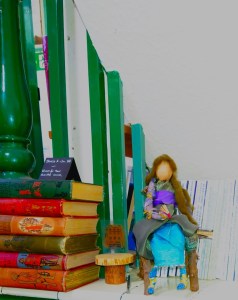
The photos of Scarthin’s are recent ones taken by my son a couple of weeks ago. My anecdote dates back maybe thirty years, and the shop now is perhaps even more magical than it was then. The woman who served me was right about ‘Like water for Chocolate’, by the way. It is magical.
The wonderful thing about reading fiction is that you get to choose your adventure and escape from whatever is wrong with your world. Even if the only thing wrong is the normality of day-to-day life. The wonderful thing about bookshops is that they offer you a gateway to that adventure. In those days, I had no hopes of becoming a writer, but it’s wonderful when your daydreaming becomes a legitimate way to pass the time.

You can locate the website for Scarthin Books here.

My new book is called Attack in the Attic by Abigail Thorne and you can find it here

When Esther and Sue discover a mysterious corpse in the attic of their quaint Derbyshire Bookshop, Esther, an ex-librarian, and the owner must take it upon herself to uncover the truth.
Join her as she navigates the puzzling clues left behind. Unearthing secrets that hid in the shadows of the dusty shelves. With the help of her curious staff, can this amateur sleuth discover the identity of the victim and the culprit before the police arrest the wrong person?
Get ready to curl up with this cosy mystery and unravel a thrilling tale of intrigue and suspense.

Diary post.

24 October 2022


Well, the new computer has been up and running for a couple of weeks now, and I am used to all its foibles. My two newest projects are ready to be worked on and I feel OK about that. All the other things that I lost will take many months to sort out, and some things will remain unrecoverable. Now that I am over the shock, I feel OK. strangely it feels as though I am starting again; the rubbish went along with the good things, and I have a clean sheet to work with.


The deadlines I set myself are now clearly unachievable and there is a freedom which goes along with that. I work with deadlines because of my tendency to procrastinate, but obviously lately I had become hung up on them because the sense of freedom that I now have is huge. We will have to see how long that lasts before I set new deadlines to ensure that I finish things.


This fresh start has corresponded with the late season change here and I am writing this with the fire lit and sound of intermittent rain on the skylight. It’s the temptation to collect chestnuts or look for mushrooms that will interfere with my writing time. The last of the veg from the garden is waiting to be processed for the winter, and the smell of autumn in the air is enticing.


The last few weeks I have faced the question that many writers face: what I do next, how I cope with this problem. Writers mostly work alone, and they create intensely personal work like any creative. So, what do you do when something goes wrong, when you face criticism, be it well-meaning or malicious? When you come upon a problem as I just have or when you feel as though you have failed.
I know that in the past I have given up too easily, taken on board far too much of the negative comments that I have received and given up whatever I was doing too soon.


This time, I made myself a promise. I said that I would not give up until I had written a million words for publication. (You can read more about that here.) That has made the first stark choice easy. I will carry on because I have not reached my million words, no soul searching required.
The next question is more complex, of course, and involves discovering what you can learn from the experience and what you will change as you move forward. Part of that was easy. I have taken the time to learn how Cloud backup systems work. Most people already know this. I didn’t need to know before I became a writer, and I didn’t think I needed to know even then. Faced with all the other things, I had to learn it was, I thought, unimportant and one or two terrible experiences put me off altogether.


This time, I spent a week working out what the best backup system for me was going to be, before I wrote a single new word. The other significant thing that has come with having a fresh start is knowing how far I have come since I started. I know what systems work for me, what information I need to have on hand. I littered my last computer with apps and worksheets that had worked for other people, but which didn’t work for me. They have gone so now, the things I have are the things I need. Now I am not so naïve as to believe that I have it sorted after all there is so much more to learn, but this time I know I can make it to base camp.


I know that to write; I need little more than my beloved Scrivener. I lost all my settings, of course, but I know how to fix that. And in time I can set that up it to deal with everything. No need to look for a quick fix. It will be at least six months before I can say that I have made up the lost ground, but I am no longer kicking myself for being so stupid, because there will be new opportunities to look forward to.
I now have a work plan for the next few months and have already set to work on my newest projects. That means in between writing I can enjoy the things the season offers.

Chestnut waiting for?

I hope to share some recipes for chestnuts, chillies and other autumn produce and some scenes from the glorious Galician countryside, depending on how much it rains. (I am emotionally torn here as we desperately need the water) Walking is slow and painful for me now because of a back problem and while in the past I would not have let the weather stop me, now I must be more conscious of the conditions and stick to clear weather days for being active.
Next time I should have some actual progress to report, as well as some information about the books I hope to publish next year.

New Topic- Diary

Three weeks ago, my computer died. I didn’t have good backups, despite having promised myself that I would do a manual backup every week. I didn’t want to pay for extra cloud storage, which is why One drive wasn’t working amongst other things that seemed important at the time and that is the reason for my predicament. To cut a long story short I lost three months’ worth of writing and even more editing. Of course, that is not all that I lost. My settings on scrivener worked out carefully over the last year. The updated formatted copies of my books with their blurbs and covers also went up in smoke. I was in shock for several days, not believing the truth, after all my computer wasn’t old so why would the mother board suddenly fail.

When I did recover, and the nice man in the repair shop confirmed my worst fears, he felt so sorry for me he refused to let me pay for his work. I started thinking. I have always known that I am not competent to post writing advice on this page and haven’t wanted too, because there are so many ways of achieving something with creative arts, that my way might not work for you. I have long recognised that others learn more quickly and are more prone to success than I am. However, it occurred to me that if I recorded my struggles and, my failures and victories in the world of writing, you might want to follow along and those of you as prone to disaster as I, might find comfort in my daily struggles and my equally frequent joy. I will publish every few days or when the page seems full. I don’t intend to promise anything that I can’t stick like daily posts, but it will give you a taste of the life of one writer, who still must cook meals, wash pots, deal with pain (bad back), care for animals and a husband and struggle with bad and gloomy days.

4 October 2022.

My new computer has arrived. The box is sitting on the coffee table of our snug, the room which also holds my desk. This morning though we must visit the bank in Lugo, our local bank is not good enough because we need to register new ID. Not only have my passport been renewed but I now have an identity card, the bank need copies on file. Ironically is my KDP royalties that have triggered this, they can’t make the transfer, without proof that I am still me.

It takes two hours to reach the bank instead of the forty minutes that we were expecting. First the road was closed, then the petrol station had run out of petrol. We backtracked and found another petrol station despite my fears that the whole town had run out. I have had the feeling ever since the computer incident that the world was against me, constantly analysing every event for a sign. I know that it’s not heathy, and at the back of mind is fact that I am normally the optimist in the family and our relationship suffers when I can’t find something positive to look forward to.

Despite my fears we did arrive, and everything was sorted out by the lovely assistant Isobel who was eager to practise her English, meaning the whole transaction was carried out in a bazaar mixture of the two languages. Of course, we had had a coffee next this is Spain! So, it was well into the afternoon before I faced the box on the coffee table.

Under normal circumstances I would be thrilled to have a new toy, I love gadgets of all kinds but on this occasion, I knew that I would have to confront what I had stupidly and needlessly lost and somehow produce a plan to reconstruct everything. Rewriting what you have once written is not as good as writing it the first time.

I sat for a good long time before I plucked up enough courage to open it and face the fact that I three months of work to catch up on.

6 October

All set up and running and in the freezer are enough meals to keep us going for a week. There is enough chestnut and apple soup in the fridge to feed a passing army and I am writing diary entries. a My stash of Cadburys chocolate has been broken into (Thank you Jane you are a life saver). and I am scouring my mind for urgent jobs. Of course, I have not rewritten any part of Sea dead yet although I have spell checked the forty thousand words that still exist. In a few moments I am going to have a coffee with my neighbour, but I’ll let you know when I pluck up enough courage to start work again.

Hot cars, hot pants and hot weather

Cool

July and August here have both challenges and delights. Pilgrims once confined to a narrow corridor through the old town now spill into every building that someone can convert into an albergue.
Blocks of flats which stand partly empty through the winter months are full to bursting with city escapees who bought them for peanuts as second homes in the years before the Camino was so popular. The car-parks are inadequate and streets become blocked with cars who have failed to park. The shops have queues and the bars charge half as much again for a coffee.
There is compensation. Live music, parades of classic motors and motorbikes, fiestas of every kind. Last weekend a Blues festival with bands in the streets and concerts in the parks. This weekend there is comedy, and next week magic with magicians from all over Europe.
Families fill the town park, probably driven from the overheated flats and the terraces are full. We went to look at the classic cars which filled the square and struggled to find a seat in the shade to eat our ice cream. Those who tried the unshaded seats soon moved as they burned their legs and bottoms on the metal frames or stone bases of the benches.


When we found somewhere, I couldn’t help but watch the family sat opposite us. There were six of them, parents and four children, all crammed onto the seat. Each one of them had a mobile phone, including the toddler perched on Mum’s knee. In the half hour we sat there, not one looked up, or spoke. I wanted so much to learn what held their attention so completely. As we left and wandered off to find the music, and I wondered if they had set alarms to remind them to go for lunch.
I didn’t blame them because they looked as content as you can be on a hot summer Sunday.


On both Monday and Tuesday, the unusually high temperatures encouraged everyone outdoors. Perhaps to discover a shady spot beside the river or the local reservoir, where at least you could go in the water to keep cool.
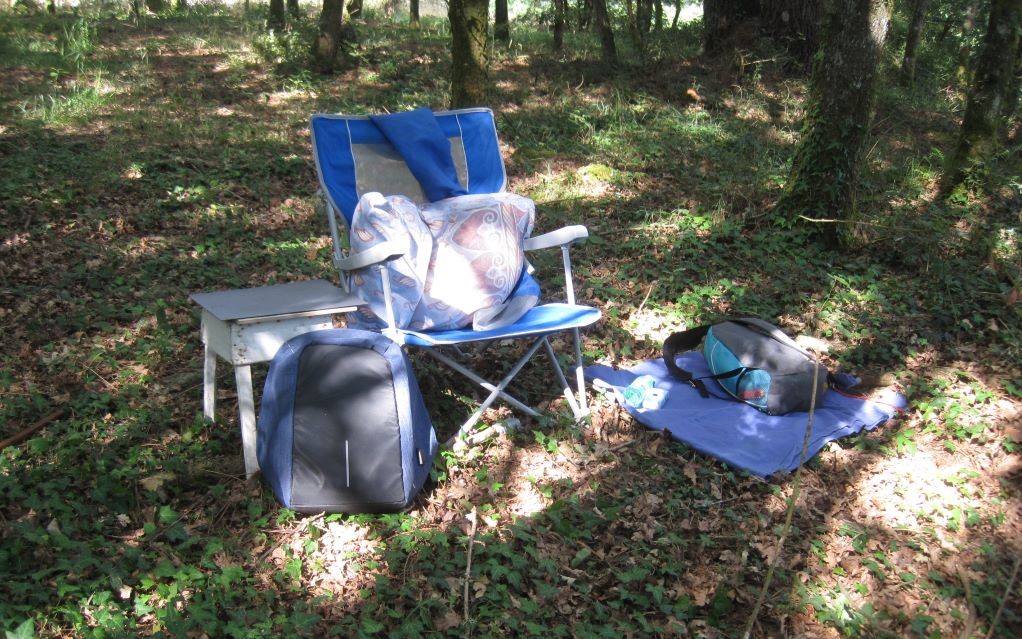
In the end, we did both, abandoning any pretence of work. As it was our first visit to the reservoir this summer, and I was afraid there would be no water. I needn’t have worried, the amount of water surprised me. As you can see from the photo, it’s plenty for a swim. Although the shady spot amongst the trees where we put our chairs was a long way from the, much reduced lake.


For a long time, I hesitated, thinking of my comfy chair and the book I had with me and telling myself that I had swum in the river only yesterday.
The heat drove me to the water in the end. I planned to sit in the shallows to cool off, but when I arrived, the shallow edges were as warm as a bath and the cooler deep center became irresistible. I pushed myself off and swam out beyond the skeletons of trees that had drowned when the valley was flooded.
At once, I was glad that I had. Water dampens sound and the noise from the families on the shore faded to nothing. Here I was, quiet and alone with the fish and the dragonflies as company. These days I swim slowly and leave time to gaze at my surroundings, watching fishermen in the distance cast their lines and draw them back to the shore. And in time, my mind separated from the action of swimming and the next scenes for my book, which had eluded me the day before, came into focus.
I altered my course not wanting to go out too far, not because I was afraid of drowning but because the fire planes use the lake to pick up water in huge buckets and I didn’t was to find myself scooped into the air. I swam instead toward the river, hoping to encounter a current that ran cold, but I never did.
There was little incentive to get out. I’m not a speed merchant, and the heat was more tiring than the swim. But I knew that at some point in the afternoon Steve would wonder if I was OK, so I meandered back. Sometimes, just hanging silently in the current and letting the fish come to investigate and watching the buzzards hang over the valley.
The trend is to call it wild swimming, which makes it something it’s never been in my experience. It’s so much calmer than the local pool. There is no need to race or to dodge teens playing games. It feels considerably more civilised, but then I suppose we put our own definitions on those words, and I am old enough to be comfortably out of fashion.
Later, but on the same theme, I wondered if the hour or two I sent on my deckchair reading among the trees qualified as forest bathing. After all, I was still wearing my swimming costume. If it does, maybe I’m more fashionable than I thought.

Broad Beans. Part 2

Broad beans part two.

Wow. At last, I have got round to finishing the broad bean post and too late for most of you I imagine. The last of ours are hung in the barn ready for saving as dry beans.
Today I’m going to share two ways of making a lovely dip with middle eastern flavours.

Use the first if you have bountiful vibrant green newly picked beans and want to eat them fresh.

The second is for long-term storage.


Luckily both recipes work with frozen beans and make a nice change from hummus.
The second is a cunning way to preserve beans by dehydrating them. When this jarful of goodness is finished you can turn it into a dip any time you like, even take it backpacking or camping and it still tastes delicious.

Version 1. Fresh broad bean dip.

500 g shelled broad beans.
5 tbsp good olive oil
1 onion finely chopped
1 tbsp ground cumin
1 garlic clove finely chopped.
1 tbsp lemon juice
175ml water.
1 tbsp finely chopped fresh mint.
Paprika.
Salt and Pepper to taste.

Bring a large saucepan of lightly salted water to the boil
Add the beans and simmer for 7 mins
Drain and dump into a bowl of iced water to stop the cooking.
Remove and discard the outer skins.

Heat 1 tbsp oil in a pan and add garlic onion and cumin, cook on a low heat being careful not to burn the garlic or cumin
When the onion is translucent add the shelled beans and cook for 5 minutes.
Transfer everything to a food processor with the lemon juice, remaining oil and mint and water.
Whiz to a puree and taste for seasoning. Scoop out and sprinkle with paprika and extra olive oil if liked.
Serve with crusty bread.
It’s really good!

Version two.
Same ingredients except I added a slice of preserved lemon which boosted the flavour and don’t add the oil until you use it.

Prepare the beans in the same way.
Add onion, garlic and cumin to the water and bring to a boil simmer until the onion is soft.
Note do not fry in oil as the end product won’t keep if you do.
Add the beans and a little more water if needed and bring back to a boil.
Tip into a food processor adding lemon, lemon, juice and mint.
Whiz to a purée and add salt and pepper to taste. And allow it to cool
Spread out onto dehydrator trays, Using either greaseproof paper or use the sheet designed for fruit purée.
Dehydrate on a low heat until dry and brittle, it looks awful at this point but don’t worry all will be well.
Grind in a coffee mill.
This gives you a nice green powder add half a teaspoon of cornflour, this helps both with rehydration and keeping the powder as powder.
This is an ideal glut solution so doubling or tripling the quantities is the way to go.
Put into a sterilised jar and label.
Store in a dark place.

TO USE
Add 1 quantity of powder to two quantities of boiling water stirring well.
Now you have some choices,
At home add extra virgin olive and stir until you have a good consistency, check for seasoning and eat.
Add two tablespoons of Greek yoghurt and I of oil, check seasoning and eat.
For camping, measure one serving into a zip-lock bag and, add a single salad serving of olive oil from one of those little packets with the water at the same time and squidge around in the bag.
Eat with crisps or bread sticks.

Buy now at Amazon.co.uk Or Amazon.com

Or read for free on Amazon unlimited